
Living with neuropathy
Can you die from neuropathy?
For the great majority of people the answer is no — the ordinary forms of peripheral neuropathy are not themselves fatal. The risk that does exist is indirect, specific, and largely preventable, which is the part worth knowing.
Written by the Managing Neuropathy editorial team under the direction of Dr. Tom Biernacki, DPM, FACFAS · Clinical review pending · Last updated 7 September 2026
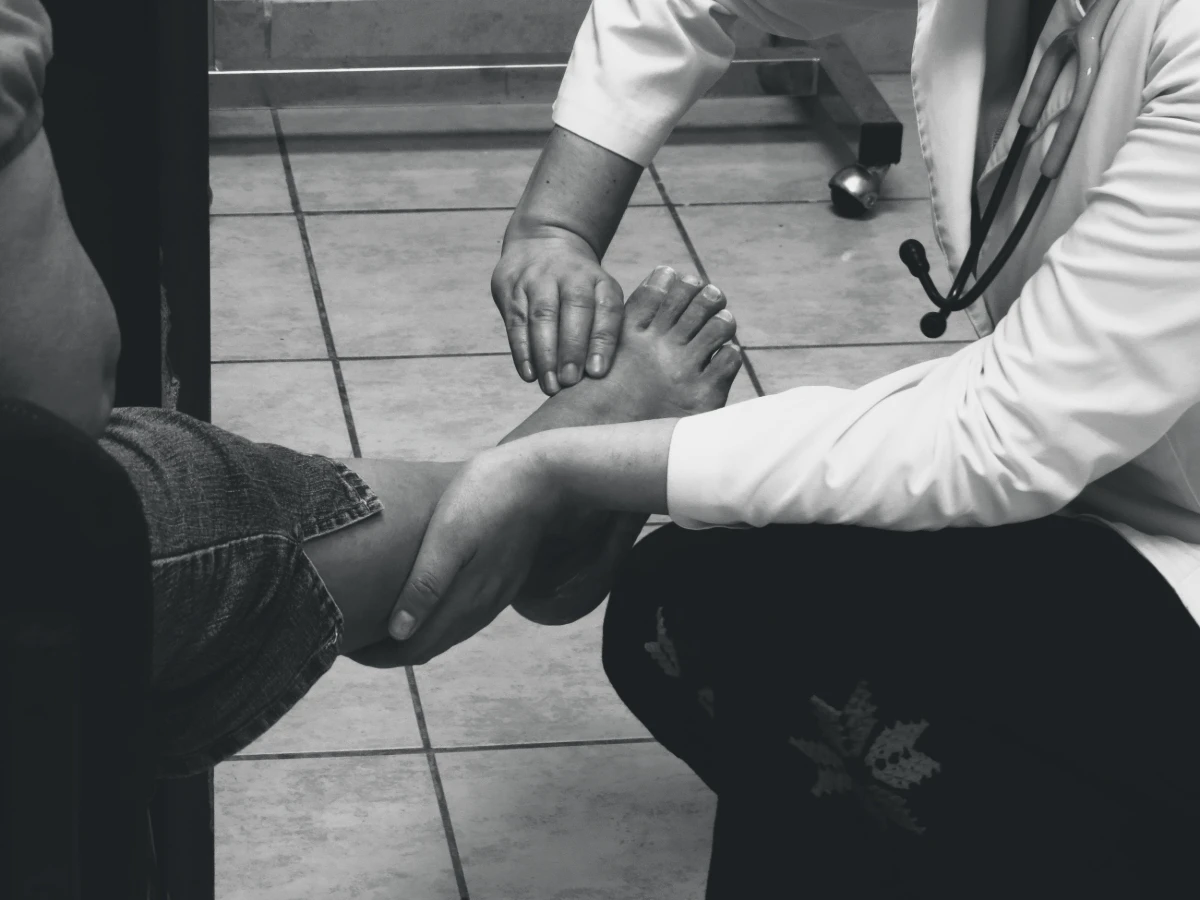
The short answer. The common, slowly progressive neuropathies — diabetic, alcohol-related, idiopathic — do not kill people directly. They do raise risk through four identifiable routes: a foot injury that is never felt and becomes a serious infection; falls; damage to the nerves controlling the heart and blood pressure; and losing the warning signs of a dangerously low blood sugar. Separately, a small number of uncommon causes of neuropathy are serious diseases in their own right. Every one of those four routes has a practical countermeasure.
Why the honest answer is not simply “no”
People asking this question have usually been told their neuropathy is not dangerous and can also see that their feet are getting worse. Both things are true, and the way to hold them together is this: the nerve damage is not what threatens you. What it removes is your warning system — and warning systems are what keep small problems small.
Route one: the foot injury nobody felt
This is the most important route by a wide margin, and the one this site exists to interrupt.
A foot that has lost protective sensation does not report a blister, a stone in the shoe, a seam rubbing, or a small cut. The injury continues because nothing tells you to stop. It becomes an ulcer. An ulcer can become an infection, an infection can reach bone, and bone infection is what leads to amputation. The uncomfortable statistic in this field is that survival after a major lower-limb amputation is poor — comparable, in published series, to some cancers — largely because the people it happens to are already carrying significant cardiovascular disease.
Read that as a reason for optimism rather than fear. This chain has a first link, and the first link is a small skin injury on a foot that could not feel it. That is a link you can break at home, today, in about a minute a day.
Route two: falls
Position sense from the feet is a large part of how balance works. When it degrades, balance degrades, and falls follow — most often in the dark, on uneven ground, or when turning. A hip fracture in an older adult is a serious event with its own mortality, so this is not a minor concern.
It is also one of the more improvable ones. Balance and strength training genuinely works, home hazards can be dealt with in an afternoon, night lighting is cheap, and the medication review matters: sedating drugs, including some used for nerve pain itself, add to the risk. That trade-off is discussed here.
Route three: the nerves that run your heart and blood pressure
When autonomic fibers are involved, the effects reach beyond the feet. Cardiovascular autonomic neuropathy is associated in long-term studies with higher mortality, and it works through recognisable mechanisms: blood pressure that drops on standing and causes falls, a heart rate that cannot respond normally to demand, less stable blood pressure under anaesthesia, and cardiac events that present without the usual chest pain.
It is detectable. Lying and standing blood pressure takes two minutes in any clinic. The full picture is here.
Route four: losing the warning for low blood sugar
In people on insulin or sulfonylureas, autonomic damage can remove the shakiness, sweating and pounding heart that normally announce hypoglycaemia. Without those warnings, a low can progress much further before it is noticed. This is a specific, addressable problem — it changes targets, monitoring and often the medication plan — and it is a reason to raise it with a diabetes team rather than absorb it.
The uncommon causes that are serious in themselves
A small number of neuropathies are the visible edge of a systemic disease, and these are the ones where the neuropathy is a signal rather than the problem:
- Rapidly progressive weakness over days to weeks, sometimes ascending from the legs, which can affect breathing and is a medical emergency.
- Amyloidosis, hereditary or acquired, which involves the heart and other organs alongside the nerves.
- Vasculitis, where inflamed blood vessels damage nerves in a patchy, asymmetric pattern.
- Neuropathy as the presenting sign of a blood disorder or a cancer, or of a treatable deficiency that has gone very far.
The common thread is that these do not look like ordinary neuropathy. They move fast, they are asymmetric, they involve weakness early, or they come with weight loss and systemic illness. That is why speed of onset is one of the first questions any competent assessment asks. The types are compared here.
So how long can you live with neuropathy?
Most people live a normal lifespan with it. Where studies show reduced survival, the reduction tracks the company neuropathy keeps — diabetes, kidney disease, cardiovascular disease, autonomic involvement, prior amputation — rather than nerve damage as such. Which is another way of saying that the levers that matter are the ones you already have: glucose control, blood pressure, lipids, not smoking, staying mobile, and protecting the feet.
Get medical help urgently for these
A hot, swollen or malodorous foot is a same-day problem, not a next-appointment problem.
Common questions
Does neuropathy shorten life on its own?
The ordinary chronic forms are not directly fatal. Where studies find shorter survival, it is largely explained by the conditions that caused the neuropathy and by the complications listed above, rather than by nerve damage itself.
Will I lose my foot?
Most people never do. Amputation is the end of a long chain that starts with an unnoticed skin injury, and every link is interruptible — daily inspection, prompt attention to any wound, shoes that fit, and regular professional foot checks. Risk is highest with a previous ulcer, a previous amputation, poor circulation or advanced kidney disease, which is exactly when checks should be more frequent rather than less.
Is my neuropathy going to keep getting worse?
Not inevitably. The usual course is slow, and progression depends heavily on whether the cause is being addressed. What actually drives progression is covered here.
I have no pain, only numbness. Is that safer?
It is more comfortable and it is not safer. Painless numbness is the version most associated with unnoticed injury, which is why it deserves the same daily routine as the painful kind.
What single thing reduces my risk most?
Looking at your feet every day and acting on anything you find within days. It costs nothing and it interrupts the route that carries the most risk.
Related reading
The daily foot check · Diabetic neuropathy · Autonomic neuropathy · What makes it worse · The full symptom list · Which doctor to see
Sources and further reading: American Diabetes Association Standards of Care, diabetic foot care and neuropathy sections. Published long-term cohort studies of mortality following diabetic foot ulceration and lower-extremity amputation. Consensus statements on cardiovascular autonomic neuropathy and associated mortality. National Institute of Neurological Disorders and Stroke, peripheral neuropathy and Guillain-Barré syndrome information.
This page is general education and is not a diagnosis or a prognosis for any individual. If you are worried about your own risk, that conversation belongs with a clinician who can examine you. Clinical review by Dr. Biernacki is pending; the review date will be shown here once complete.
For our Michigan neighbors
The risk is in the feet,
and it is checkable.
A risk assessment — sensation, circulation, skin, footwear, and how often you should be seen — is a short appointment that changes the odds. Dr. Biernacki’s Michigan practice does exactly this.
Everywhere else, take this page to your own clinician.

Dr. Tom Biernacki, DPM, FACFAS is a double board-certified foot and ankle surgeon (ABFAS and ABPM) and a Fellow of the American College of Foot & Ankle Surgeons. He is the founder of Balance Foot & Ankle in Howell and Bloomfield Township, Michigan, where peripheral neuropathy, diabetic foot risk and loss of protective sensation are part of his weekly clinic. His patient education videos have drawn more than 950,000 subscribers on YouTube. He writes Managing Neuropathy to put the explanation he gives in the exam room in front of the people who cannot get to one — including when a product is worth buying and when it is not.