Daily foot care
Daily foot care
None of this is complicated and none of it is expensive. It is simply the set of habits that keeps a foot without a warning system out of trouble — done consistently, which is the hard part.
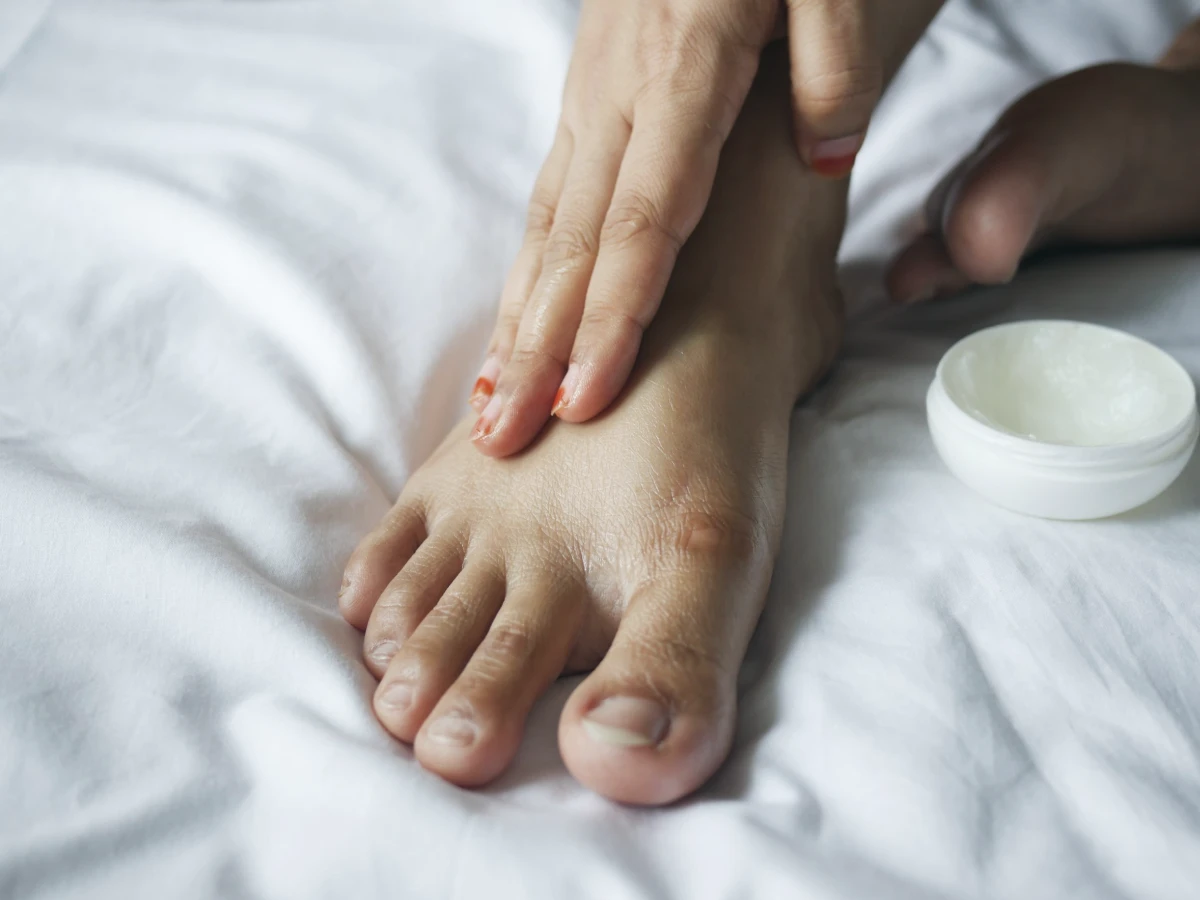
The whole of foot care in one sentence. Look at them every day, keep the skin intact, keep the shoes fitting, keep the heat away, and get anything new looked at early. Everything below is detail on those five.
Washing and drying
Wash daily in lukewarm water — test it with your elbow or a thermometer, never your feet, because you cannot judge temperature reliably with damaged nerves. Do not soak. Soaking softens and weakens skin, and long hot soaks are a common route to a burn.
Then dry properly, and pay particular attention between the toes. Trapped moisture there macerates skin and invites fungal infection, and it is the single most-skipped step in the whole routine. A corner of the towel or a hairdryer on cool works.
Moisturising, and the one place not to
Apply an emollient daily to the tops, soles and heels — and never between the toes, where added moisture does the opposite of good. For thickened, dry or cracking skin, a preparation containing urea is the one worth asking about.
Skin that has stopped sweating is not a cosmetic problem: it is a sign that the small autonomic nerve fibers have been affected, and dry skin splits. A heel fissure on a numb foot is an open door for infection. More on that here.
Nails
Cut straight across, not down into the corners, and file the edges smooth rather than cutting them short. Do it after washing when the nail is softer, and in good light.
Hand the job over to a professional if the nail is thick, discoloured, ingrowing or painful; if you cannot comfortably see or reach your feet; or if your eyesight has changed. This is the most common way people injure their own feet, and it is entirely avoidable.
Callus and corns
Do not cut callus yourself, and do not use corn plasters or medicated corn removers. Those products contain acid; on a foot that cannot report pain, they burn a hole rather than remove a corn. Callus is a signal that load is concentrating in one spot — the useful response is professional debridement plus fixing the pressure, usually through footwear or an orthosis. Callus with a dark spot inside it means bleeding underneath and needs to be seen promptly.
Socks and shoes
- Fresh socks daily, and sooner if they get damp. Seamless or flat-seamed, non-binding at the top, in a fiber that moves moisture. Light colors show drainage you might not feel. What the labels actually mean.
- Retire socks with holes or thin patches, and never darn them — a repair ridge is a pressure point.
- Check inside every shoe by hand before putting it on. Every time.
- Buy shoes late in the day, measured standing, both feet, in the socks you will actually wear. The full fit criteria.
- Break new shoes in gradually — an hour at a time — and inspect your feet after every wear.
- Wear something indoors. Most unnoticed injuries happen at home. What works indoors.
Things that quietly cause harm
| Common habit | Why it is a problem here |
|---|---|
| Heating pads, hot water bottles, heated foot spas, radiators | Burns on skin that cannot report temperature — severe, common and preventable |
| Walking barefoot, indoors included | Puncture and abrasion injuries that are never felt |
| Corn removers and self-cutting callus | Chemical burns and wounds in tissue that heals slowly |
| Soaking feet | Softens and weakens skin; scald risk |
| “Breaking in” a tight shoe | The shoe wins; the skin does not report it |
| Cream between the toes | Maceration and fungal infection |
| Crossing the legs for long periods | Compresses the nerve at the outside of the knee. This is a real cause of foot drop. |
How often should your feet be examined professionally?
Frequency follows risk rather than preference, and the widely used intervals look roughly like this. Your own clinician sets yours, and this is worth asking for explicitly — a stated interval is one of the more useful things to leave an appointment with.
Managing Neuropathy
How often should your feet be checked?
Foot clinics worldwide sort patients into four risk categories, and each category carries its own screening interval. Most people living with neuropathy have never been told which one they are in.
| Risk category | What defines it | Screening interval |
|---|---|---|
| 0 · Very low | No loss of protective sensation and no sign of arterial disease. | Once a year |
| 1 · Low | Loss of protective sensation or peripheral arterial disease. | Every 6 to 12 months |
| 2 · Moderate | Both together, or either one alongside a change in foot shape. | Every 3 to 6 months |
| 3 · High | Either one, plus a previous foot ulcer, an amputation, or end-stage kidney disease. | Every 1 to 3 months |
Source: International Working Group on the Diabetic Foot, IWGDF Practical Guidelines, 2023 update, Table 1 (risk stratification system). Education, not a diagnosis — take the category to the clinician who examines your feet.
Keep moving
Regular walking and general exercise is the intervention with the best evidence for neuropathy symptoms, and it improves glucose control and balance at the same time. Balance and strength work matters especially: when position sense from the feet is unreliable, trained balance is what prevents the fall. Build up gradually, inspect your feet afterwards, and get footwear sorted before increasing distance.
Helping someone else
If you check a family member’s feet, ask first how they would like to be helped and keep it matter-of-fact — feet are a place people feel exposed. Agree a fixed time so it does not need renegotiating daily. Photograph anything new with something for scale, and keep a note of what was reported and to whom. If they are managing well but cannot see their soles, that one task may be all they need from you.
Questions worth asking at your next visit
- Do I still have protective sensation, and how was that tested?
- How is my circulation, and does it need further assessment?
- What is my risk category, and how often should I be seen?
- Is my current footwear suitable, and would I qualify for therapeutic shoes? The Medicare benefit is explained here.
- What exactly should I report, how quickly, and to whom — including out of hours?
- Who should be cutting my nails?
A printable version of this list is here.
Related reading
The printable daily check · Choosing shoes · Diabetic socks · Creams, and the heat warning · Why this routine matters · Michigan appointments
Sources and further reading: American Diabetes Association Standards of Care, diabetic foot care section. National Institute of Diabetes and Digestive and Kidney Diseases, diabetes and foot problems. International consensus guidance on the prevention of foot ulcers in people with diabetes, including risk stratification and screening intervals.
This page is general education and is not a diagnosis or a treatment plan. Follow your own clinician’s instructions where they differ.
For our Michigan neighbors
Get your risk category
written down.
Sensation testing, circulation, skin and footwear, and a stated re-check interval. Howell and Bloomfield Township.
Everywhere else, take this list to your own clinician.