Balance Foot & Ankle · Howell and Bloomfield Township
Michigan neuropathy care
If you live in south-east Michigan, the examination described across this site is one you can actually have — sensation tested properly, circulation checked, and the risk to your feet written down rather than guessed at.
Dr. Tom Biernacki, DPM, FACFAS · double board-certified foot and ankle surgeon · confirm current availability and insurance participation with the practice.
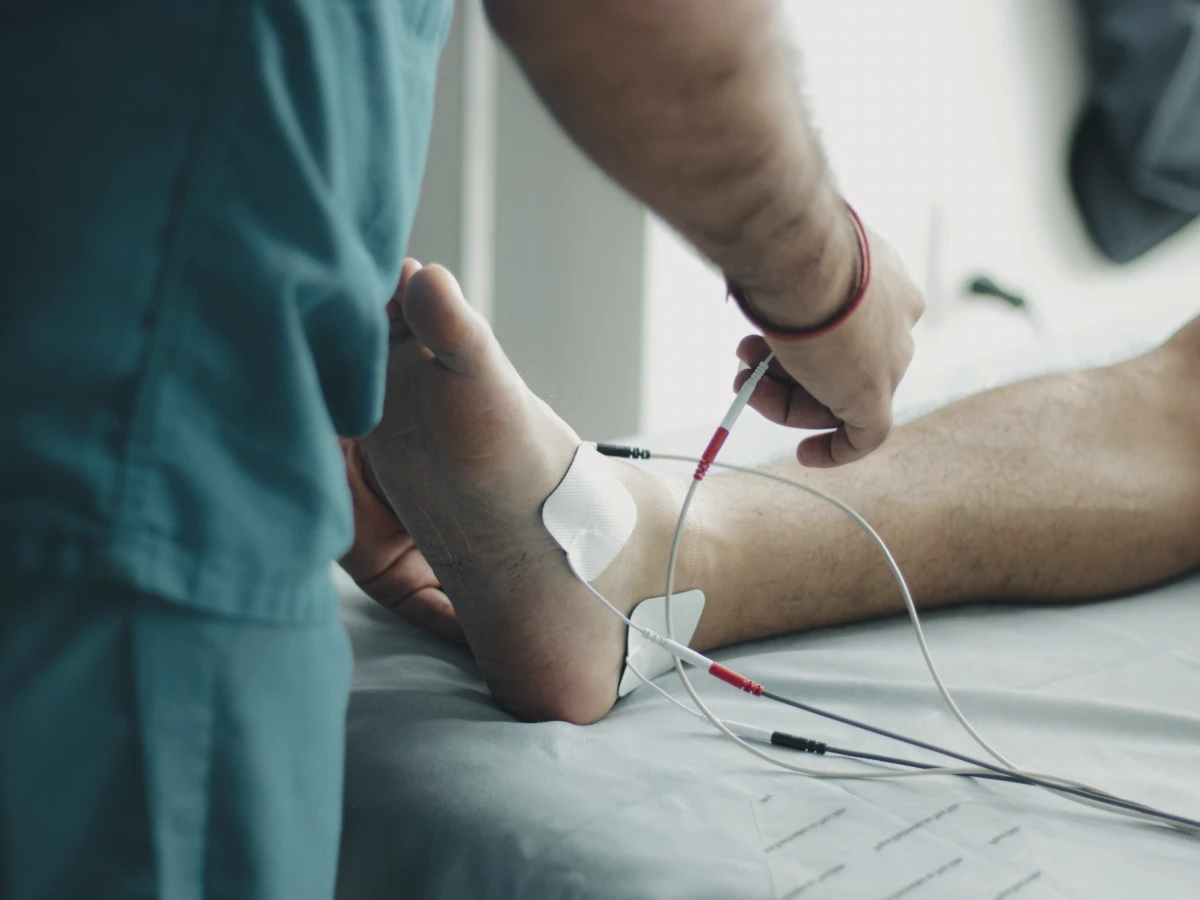
If you have diabetes and numb feet, an annual foot examination is not optional care. It is the single check most consistently recommended, because it finds the loss of protective sensation that turns a small injury into a serious one — usually before anything hurts.
What actually happens at the visit
Most people have never had their feet examined in a structured way, so it is worth knowing what to expect. None of it is uncomfortable, and it takes minutes rather than an appointment full of tests.
Sensation, measured
Monofilament testing at defined sites, vibration with a tuning fork, plus reflexes and pinprick where relevant. This is what establishes whether protective sensation is present — the finding that changes everything else.
Circulation, checked
Pulses felt at the foot and ankle, skin temperature and color, capillary refill, and further vascular assessment when the picture warrants it. Nerve and artery problems travel together and are managed differently.
Skin, nails and pressure
Callus, fissures, nail problems and the pressure points where load has been redistributed. Callus over a bony prominence on a numb foot is a warning sign, not a cosmetic issue.
Shape and gait
Clawed toes, a collapsing or high arch, restricted ankle movement, and how you actually walk. Deformity changes where the load lands, and load is what breaks skin down.
Footwear, inspected
Bring the shoes you wear most. Wear pattern, internal seams, depth and width tell more than any measurement, and a shoe that is quietly too small is one of the most common findings.
A written risk category and plan
Where your risk sits, how often you should be re-checked, what to do about anything found, and what would justify calling before the next visit.
What a podiatrist can and cannot do about neuropathy
Being straight about this matters more than a longer list of services.
| Can | Cannot |
|---|---|
| Establish whether protective sensation is lost, and how far it has gone | Regrow damaged nerve fibers, or reverse established nerve loss |
| Find the foot problems that neuropathy hides — wounds, infection, deformity, pressure | Control your diabetes, thyroid, kidney function or alcohol intake for you |
| Treat and offload ulcers, debride callus safely, manage nail and skin problems | Replace the medical workup that identifies the cause of a new neuropathy |
| Prescribe and fit accommodative footwear and orthoses, and assess therapeutic shoe eligibility | Promise that footwear or a device will reduce your pain |
| Refer for nerve testing, vascular assessment, or a neurology opinion when the pattern calls for it | Manage the nerve pain medication side of things single-handedly |
The honest summary: the nerve damage is usually managed with your primary care team and sometimes a neurologist. Who does what is set out here. What a foot specialist adds is the part that prevents the serious outcomes — and that part is very effective.
Reasons to be seen sooner rather than at the next check
Any break in the skin on a foot with reduced sensation, however small, and any wound that is not clearly better within a week. A foot that has become red, hot or swollen, particularly with diabetes — that is a same-day problem. A new change in the shape of the foot. A blister, blood blister or dark patch under callus. New numbness or weakness spreading quickly. A cold, pale or painful foot. For anything urgent, call 911 or go to emergency care — this website and routine scheduling are not emergency services.
The two offices
Booking and insurance
Scheduling, insurance participation and current availability are handled by the practice.
What to bring
Not your best pair. The ones doing the damage are the informative ones.
Including anything containing vitamin B6, which at sustained high doses causes neuropathy rather than treating it.
Toes first and both sides tells a different story from one foot only. How to describe it usefully.
A printable list is here.
Not in Michigan?
Everything on this site is written to be used anywhere. Take the relevant page to your own clinician and ask for the same examination by name: monofilament and vibration testing, pulses, a look at your footwear, and a stated risk category with a re-check interval. If nobody has established why you have a neuropathy, ask for the bloods that look for a treatable cause. This page explains which specialist does what.
Common questions
Do I need a referral?
It depends on your plan. The practice can tell you what your insurance requires before you book.
Will I be told to buy something?
An examination is an examination. Where footwear or an orthosis is genuinely indicated it will be explained, along with whether it may be covered rather than bought. The Medicare therapeutic shoe benefit is explained here.
I have no pain, only numbness. Is a visit still worth it?
Yes — more so, in fact. Painless numbness is the version most associated with unnoticed injury, so it is exactly the group where a check changes outcomes.
How often should I be seen?
That follows your risk category. Someone with sensation intact and good circulation is on a very different schedule from someone with a previous ulcer or amputation. Getting that interval stated is part of the point of the visit.
Two offices, one number
Have the sensation actually tested.
Howell and Bloomfield Township. Ask for a diabetic foot examination or a neuropathy assessment when you call.