Product guidance · Socks
Compression socks and neuropathy: when they help, and when they make things worse
Compression socks don’t treat nerve damage. They treat swelling. For someone with neuropathy that difference matters, because the same squeeze that helps a swollen ankle can hurt a foot that can’t feel it, or a leg whose arteries are already narrowed.
Written by the Managing Neuropathy editorial team under the direction of Dr. Tom Biernacki, DPM, FACFAS · Clinical review pending · Last updated 16 October 2026
The short answer. Compression socks don’t repair nerves, and no trial has shown that they ease nerve pain. They are worth wearing when neuropathy comes with leg swelling or vein problems, and waist-high compression can help the dizziness on standing that autonomic neuropathy causes. They can do harm when they are too tight on skin that can’t feel them, or when the leg arteries are narrowed. If you have diabetes and any loss of feeling in your feet, check with your foot care team before wearing compression of any strength. Anyone should have their foot pulses checked before wearing anything firm, meaning 20 mmHg or more. Whatever you wear, put it on smooth, check your skin every day and take it off at night.
What compression socks actually do
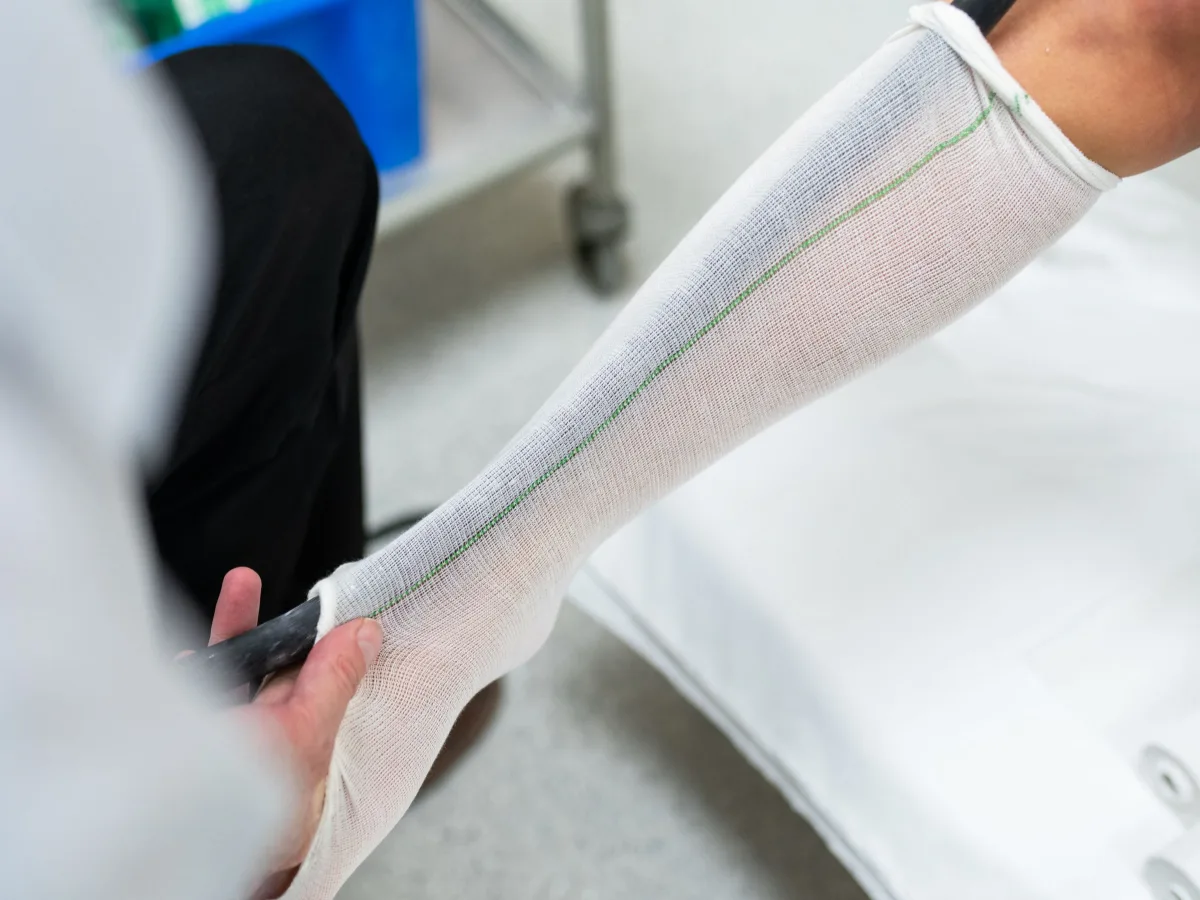
Compression socks squeeze the leg, most firmly at the ankle and less further up. That pressure helps the veins push blood back toward the heart and stops fluid pooling in the tissues. It is why they are used for:
- Swelling from long-standing vein problems (chronic venous insufficiency) and varicose veins
- Lowering the risk of blood clots in some situations, when a clinician recommends them
- Lymphedema, under specialist care
- Healing venous leg ulcers, as part of wound care
They don’t regrow or repair nerves, bring back feeling, or quiet burning and tingling. We could find no trial showing that compression socks relieve nerve pain. If your feet are swollen and numb, compression may help the swelling. That is a different claim from “compression helps neuropathy.”
There is one neuropathy problem compression does help. When autonomic neuropathy makes your blood pressure drop as you stand up, the American Diabetes Association lists compression garments over the legs and abdomen among the first measures, alongside salt, fluids, exercise and medicines. It has to reach high enough to work: a specialist consensus on this kind of low blood pressure says waist-high garments work best, followed by thigh-high stockings, and that knee-high stockings aren’t effective. Autonomic neuropathy, explained.
Why neuropathy changes the rules
Two things make compression riskier when you have neuropathy.
- Numb skin can’t warn you. A sock that is too tight, wrinkled or rolled down at the top presses a groove into the skin. Normally that aches and you take it off. With neuropathy you may not notice until there is a blister or a sore.
- Narrowed arteries often come with it. Diabetes damages the leg arteries as well as the nerves, and squeezing a leg that is already short of blood can cut the supply further.
Stockings can damage skin even in people without known nerve damage. In a large trial in immobile stroke patients, skin breaks, blisters, ulcers and dead skin were about four times as common with thigh-length stockings (5.1%) as without them (1.3%), and the stockings didn’t significantly reduce the clots they were meant to prevent.
That is why the UK’s National Institute for Health and Care Excellence tells hospitals not to fit anti-embolism stockings on people with peripheral arterial disease or “peripheral neuropathy or other causes of sensory impairment.” An international consensus on compression lists severe diabetic neuropathy with loss of feeling among its contraindications, and advises padding, careful fitting, low pressure and close checks for anyone with polyneuropathy. Hospital anti-embolism stockings are fairly light, so a low number on the box doesn’t make compression safe on numb skin. The International Working Group on the Diabetic Foot goes further: people with diabetes whose feet are at risk shouldn’t wear tight or knee-high socks, and compression stockings should be prescribed only together with their foot care team.
Compression has also, rarely, injured nerves. A tight band just below the knee can press on the peroneal nerve where it wraps around the top of the fibula, the thin outer bone of the lower leg, and foot drop after compression bandaging has been reported. Knee-high stockings should finish about two finger-widths below the bend of the knee. Peroneal neuropathy.
Check your circulation first
Before anything firmer than light support, someone should feel the pulses on the top of your foot and behind the inner ankle bone. If they are weak, or your calves hurt when you walk, the next step is an ankle-brachial index (ABI), which compares the blood pressure at your ankle with the pressure in your arm.
Diabetes complicates that test. Stiff, calcified arteries can make the ankle reading look falsely normal, so the American Diabetes Association recommends an ABI with toe pressures, and notes that toe pressure tends to be the more accurate number. The International Working Group on the Diabetic Foot says an ABI of 0.9 to 1.3, a toe-brachial index of 0.70 or more and normal Doppler waveforms together make artery disease less likely, though no single number rules it out. Neuropathy can also hide the calf pain that narrowed arteries usually cause, so legs that feel fine aren’t proof of good circulation.
Guidelines don’t agree on a single cut-off for compression, which is one more reason to let a clinician decide:
- Most guidelines reserve standard compression for an ABI of about 0.8 or more. Below that, only reduced compression is used, under specialist care.
- In their guideline on venous leg ulcers, the Society for Vascular Surgery and American Venous Forum advise against compression stockings or bandages when the ABI is 0.5 or lower, or the ankle pressure is under 60 mmHg.
- An international consensus treats an ABI under 0.6 as a strict reason not to use compression stockings.
- Across guidelines, the cut-offs range from 0.5 to 0.8, and the evidence for readings in between is thin.
How much squeeze? Compression levels explained
| Level | Pressure | Typical use | If your feet are numb |
|---|---|---|---|
| Light | 8–15 mmHg | Tired, achy legs; long days on your feet | The usual starting point, once your foot care team has checked your circulation and skin |
| Mild to moderate | 15–20 mmHg | Everyday aching, travel, mild swelling | Reasonable for mild swelling after that check, with skin checks every day |
| Firm | 20–30 mmHg | Varicose veins and moderate swelling | Only after a pulse check, and an ABI with toe pressures if you have diabetes |
| Extra firm | 30–40 mmHg and up | Severe swelling, lymphedema, leg ulcers, after a deep vein thrombosis | Prescribed and fitted by a professional |
Pressure ratings aren’t fully standardized between brands. Firmer levels, from 20 mmHg up, are generally treated as medical grade, and pharmacies and insurers usually want a prescription for them.
Mild compression has been tested in people with diabetes and swollen legs, though only in a small way. In a trial funded by the sock maker, 80 people wore either diabetic socks with 18–25 mmHg of compression or ordinary diabetic socks while awake for four weeks. In the compression group, calves and ankles got slightly smaller, by less than a centimeter, without any drop in blood flow measured by the ABI, toe pressures or skin perfusion, but the difference from ordinary diabetic socks wasn’t clear-cut. Everyone in the trial had passed a circulation check first, with an ABI of at least 0.6 and a toe-brachial index of at least 0.3, so it doesn’t tell us how compression behaves in legs with poor circulation.
If you wear them: a daily safety routine
- Get measured. Ankle and calf, first thing in the morning, when your legs are least swollen. The right size matters more than the brand.
- Put them on first thing, ideally before you get out of bed and before swelling builds. Rubber gloves or a donning aid help if your grip or reach is limited.
- Smooth, never rolled. No wrinkles over the ankle or toes, and never fold or roll the top down. A rolled top becomes a tight band that can cut into the skin.
- Check your skin every evening, and at midday too while you are getting used to a new pair. Look for red marks that don’t fade, blisters, broken skin or color change, especially under the top band, over the ankle bones, at the heel and on the toes. Use a mirror, or ask someone, if you can’t see well. The daily foot check.
- Take them off at night, unless your clinician has told you otherwise.
- Replace them every 3 to 6 months, when the elastic starts to give.
Stop wearing them and get checked if you notice pain, marks that don’t fade, blisters or discoloration, toes that turn pale, blue or cold, or numbness or tingling that is new or worse. New pins and needles can mean the stocking is too tight, but they can also mean something else needs checking.
Compression, diabetic and “neuropathy” socks: which is which
| Type | What it is | Best for |
|---|---|---|
| Compression socks | Graduated pressure, firmest at the ankle, measured in mmHg | Swelling and vein problems, once circulation is known to be adequate |
| Diabetic socks | Non-binding tops, smooth or seamless toes, moisture-wicking and often padded. Usually no meaningful compression, though some are made with mild 18–25 mmHg compression | Protecting numb feet from rubbing and pressure |
| “Neuropathy socks” | A marketing term, not a medical category. Often diabetic-style socks, sometimes with copper or silver fibers | Comfort. Claims that they treat nerve damage aren’t supported |
The International Working Group on the Diabetic Foot recommends seamless socks made of natural fibers, preferably light-colored, which also makes blood or drainage easier to spot. And in 2015 the Federal Trade Commission charged one seller, Tommie Copper, with making false or unsubstantiated pain-relief claims for its copper-infused compression clothing; the company paid $1.35 million to settle. How to choose socks for neuropathy.
Who should check with a clinician first
- Known peripheral artery disease, weak or absent foot pulses, calf pain when you walk, or a previous leg bypass.
- Diabetes with any loss of feeling in the feet.
- Heart failure, especially if it is severe or not well controlled.
- Fragile skin, dermatitis, an open wound or an infection on the leg.
- A marked deformity or an unusual leg size or shape, which makes a good fit hard.
- An allergy to the sock material.
- Swelling in only one leg (see below).
When to see a doctor
Swollen feet and ankles have many causes, and compression treats the swelling, not the reason for it. See a doctor about:
- Swelling in both legs that is new or getting worse, especially with breathlessness. Heart, kidney and liver problems can show up this way.
- Swelling that started with a new medicine. Gabapentin and pregabalin, two of the most common nerve-pain medicines, can cause it. Across pregabalin’s controlled trials, swelling affected 6% of people taking it against 2% on placebo, rising to as much as 12% at the highest dose in diabetic nerve-pain trials, and to 19% when it was taken with pioglitazone or rosiglitazone. In gabapentin’s trials for nerve pain after shingles, it affected 8%, against 2% on placebo. Some blood pressure medicines, such as amlodipine, do it too. Don’t stop a prescribed medicine on your own.
- A sore, blister or skin break anywhere under a sock or stocking.
- Calf pain when you walk that eases when you stop.
Get help the same day for swelling in one leg, especially if it is warm, red, tender or painful. That can be a blood clot (deep vein thrombosis). With numb feet, a red, warm, swollen foot, even a painless one, can also be Charcot foot or an infection: see a foot specialist the same day, and don’t put compression on it. Call 911 if leg swelling comes with chest pain or sudden shortness of breath.
Common questions
Are compression socks good for neuropathy?
Not for the nerves themselves. Compression socks treat swelling and vein problems; they don’t repair nerves or relieve nerve pain. If you have neuropathy and swollen legs, they can help the swelling, provided your circulation is adequate and you check your skin every day.
Can compression socks make neuropathy worse?
Well-fitted socks rarely injure nerves. The risks are around them: skin damage you can’t feel, less blood flow in legs with narrowed arteries and, rarely, pressure on the peroneal nerve below the knee from a tight band. If numbness or tingling is new or worse while you wear them, take them off and get checked.
Do compression socks help neuropathy pain?
There is no good evidence that they do. We found no trial showing that compression socks relieve the burning or tingling of neuropathy. Some people find light support comfortable, which is fine, but it isn’t a treatment for nerve pain. What does help nerve pain.
Can I wear compression socks if I have diabetes?
Often, yes, but plan it with your foot care team, especially if your feet are numb. In a small trial, mild 18–25 mmHg diabetic socks slightly reduced leg swelling without reducing blood flow in people with diabetes who had passed a circulation check. Firmer compression needs a pulse check and, ideally, an ankle-brachial index with toe pressures.
What compression level is safe with neuropathy?
Start with your foot care team, not the pharmacy shelf. If you have diabetes and any loss of feeling, the International Working Group on the Diabetic Foot advises against tight or knee-high socks unless compression is prescribed together with your foot care team. Once your circulation has been checked, light compression at 8–15 or 15–20 mmHg is the usual starting point. Whatever the level, the fit matters most: measured in the morning, smooth on the leg, never rolled down, and checked every day.
Should I sleep in compression socks?
Usually not. Everyday compression socks are meant to come off at night unless your clinician tells you otherwise. Lying down takes away most of the reason to wear them, and it gives your skin a break.
Related reading
Socks for neuropathy · Diabetic socks · Cold feet: nerves or circulation? · The daily foot check · Peroneal neuropathy · Shoes for neuropathy
Sources and further reading: Cleveland Clinic, Compression therapy; MedlinePlus, Compression stockings; American Diabetes Association, Retinopathy, neuropathy, and foot care: Standards of Care in Diabetes—2026, Diabetes Care; NICE, Venous thromboembolism in over 16s (NG89), recommendations 1.3.1 to 1.3.9; CLOTS Trials Collaboration, Effectiveness of thigh-length graduated compression stockings after stroke, Lancet, 2009; Rabe E et al., Risks and contraindications of medical compression treatment: an international consensus statement, Phlebology, 2020; Society for Vascular Surgery and American Venous Forum, Management of venous leg ulcers: clinical practice guidelines, Journal of Vascular Surgery, 2014; Team V et al., Ankle-brachial pressure index and compression application: review summary, Wound Practice and Research, 2019; IWGDF, Guidelines on the diagnosis and treatment of peripheral artery disease in people with diabetes, 2023; Wu SC et al., Control of lower extremity edema in patients with diabetes: double blind randomized controlled trial assessing the efficacy of mild compression diabetic socks, Diabetes Research and Clinical Practice, 2017; IWGDF, Practical guidelines on the prevention and management of diabetes-related foot disease, 2023; Gibbons CH et al., Recommendations of a consensus panel for the screening, diagnosis, and treatment of neurogenic orthostatic hypotension, Journal of Neurology, 2017; IWGDF, Guidelines on the prevention of foot ulcers in persons with diabetes, 2023; Federal Trade Commission, Tommie Copper settlement over deceptive advertising, 2015; Wounds, Development of foot drop following compression therapy (case report), 2004; US Food and Drug Administration, Lyrica (pregabalin) prescribing information; US Food and Drug Administration, Neurontin (gabapentin) prescribing information; MedlinePlus, Amlodipine.
This page is general education and is not a diagnosis, a treatment plan, or a substitute for care from your own clinician. Clinical review by Dr. Biernacki is pending; the review date will be shown here once complete.
For our Michigan neighbors
Swollen legs and
numb feet?
Checking the pulses, the circulation and protective sensation comes before choosing a compression level, and it is part of every foot exam. Dr. Biernacki’s Michigan practice can do that, and coordinate vascular testing with your other clinicians when it’s needed.
Everywhere else, take this page to your own clinician.

Dr. Tom Biernacki, DPM, FACFAS is a double board-certified foot and ankle surgeon (ABFAS and ABPM) and a Fellow of the American College of Foot & Ankle Surgeons. He is the founder of Balance Foot & Ankle in Howell and Bloomfield Township, Michigan, where peripheral neuropathy, diabetic foot risk and loss of protective sensation are part of his weekly clinic. His patient education videos have drawn more than 950,000 subscribers on YouTube. Managing Neuropathy is written by its editorial team under his direction, to put the explanation he gives in the exam room in front of the people who cannot get to one — including when a product is worth buying and when it is not.