Symptoms & causes
Neuropathic itch: when the itch comes from your nerves, not your skin
An itch with no rash, that tingles or prickles and often eases with cold, may be coming from damaged nerves. It is common in small fiber neuropathy, and it is treated more like nerve pain than like a skin problem.
Written by the Managing Neuropathy editorial team under the direction of Dr. Tom Biernacki, DPM, FACFAS · Clinical review pending · Last updated 13 November 2026
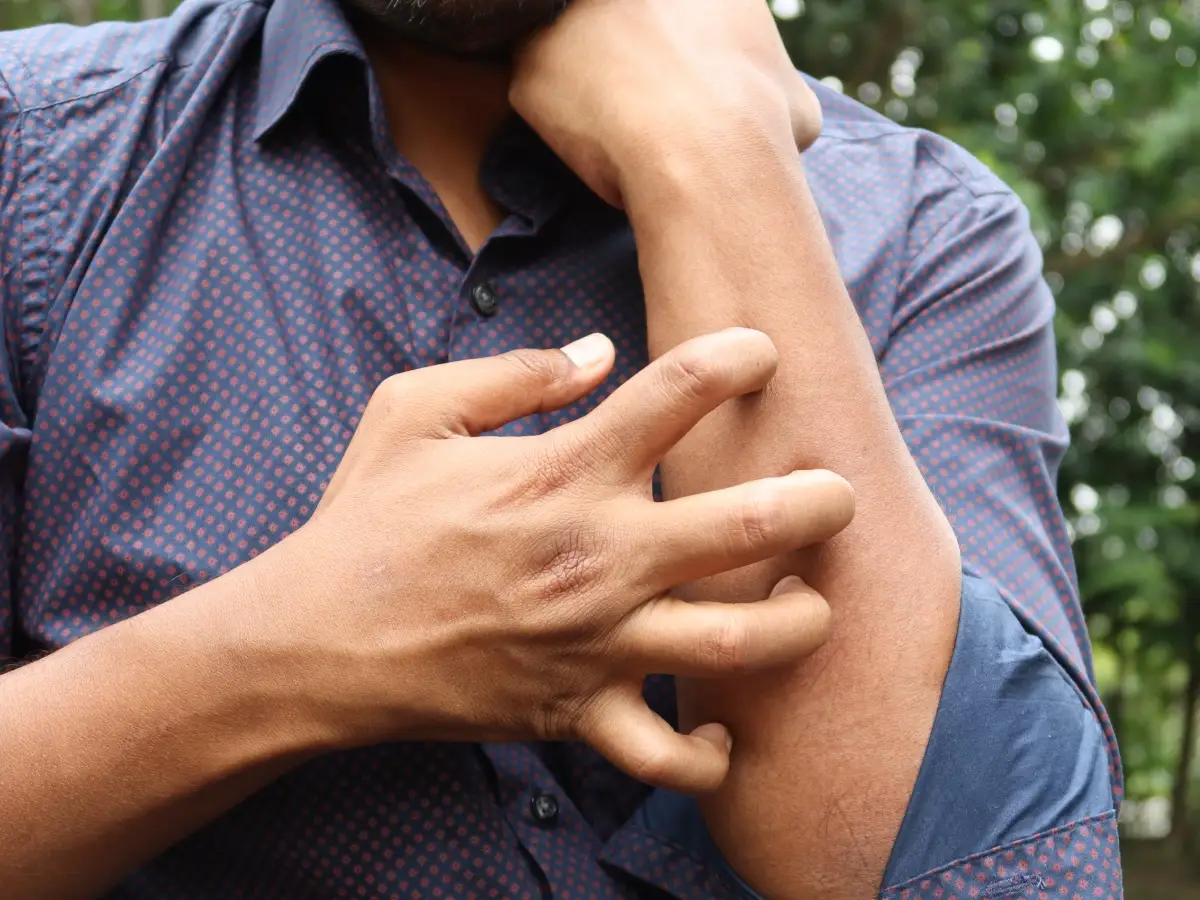
The short answer. Neuropathic itch is itch caused by damage to the nerves rather than by anything in the skin. It starts on normal-looking skin, often comes in attacks of tingling, prickling or stinging, and is often eased by cold. In small fiber neuropathy, including the kind diabetes causes, it is more often constant, usually affects the lower legs and feet, and is worst in the evening. Antihistamine pills rarely help. Cooling, creams such as menthol, lidocaine or capsaicin, and for stubborn itch the medicines used for nerve pain, such as gabapentin or pregabalin, are the usual approach. If your feet are numb, protect them from scratching: a scratch you can’t feel can turn into an infection.
What neuropathic itch is
Itch travels along some of the same small nerve fibers that carry pain and temperature. When those fibers are damaged, or the nerve roots, spinal cord or brain pathways they connect to, they can send itch signals when nothing is wrong with the skin. A 2021 review in Frontiers in Medicine estimates that about 8% of long-lasting itch has a neuropathic cause.
The skin looks normal at first; any marks come later, from scratching. People describe it in nerve words: tingling, prickling, stinging or electric shocks, often in attacks, sometimes alongside numbness in the same area. Cold often helps, which is a useful clue, though not for everyone. Scratching is unpredictable: in one type it brings real relief, while in another it makes the itch worse.
Where it shows up
| Type | Where it itches | What is behind it | Clues |
|---|---|---|---|
| Small fiber neuropathy, including from diabetes | Feet and lower legs | Damage to the smallest nerve fibers in the skin | Worst in the evening; tingling or burning feet; no rash |
| Notalgia paresthetica | Along the inner edge of a shoulder blade | Irritated nerves coming from the upper back | Often a darker patch of skin; most common in women over 40 |
| Brachioradial pruritus | Outer forearms | Pinched nerve roots in the neck, plus sun exposure | An ice pack gives striking relief |
| Post-herpetic itch | Where a shingles rash was | Nerve damage left by the virus | Can come with or without nerve pain |
| Stroke or multiple sclerosis | One side of the body after a stroke; all over, or the head and upper back, in multiple sclerosis | Damage in the brain or spinal cord | Other neurological symptoms |
Itchy feet and neuropathy
The first row of that table is the one most readers here will meet. At the Dutch national referral center for small fiber neuropathy, 1,179 people diagnosed with it filled in a questionnaire about itch, and 66% said they had it. They described it mostly as tickling, prickling or tingling. It was most common in the evening, more than half felt it in the lower legs and feet, warmth made it worse for most, and three in four said it disturbed their sleep. That was one specialist center, and it left out people whose nerve tests showed damage to the larger nerves too, so itch may be less common across neuropathy as a whole, but it shows how often itch is part of the picture, even though it is one of the lesser-known symptoms. Small fiber neuropathy, explained.
Diabetes adds other routes to itchy feet. Autonomic neuropathy changes sweating, and the American Diabetes Association (ADA) lists dry, cracked skin on the hands and feet among its signs. The ADA also notes that diabetes often causes itching in one area, from dry skin, a yeast infection or poor circulation in the lower legs. And athlete’s foot is common and itchy, so it should be ruled out before an itchy foot is blamed on the nerves. Itchy feet at night: the full list of causes.
There is also a safety point specific to numb feet: you can scratch harder than you realize and break the skin without feeling it. Breaks in the skin are how bacteria get in. In a French study, people with a break in the skin of the leg or foot, such as a wound or cracked, peeling skin between the toes, had about 24 times the odds of cellulitis of the leg.
How it’s diagnosed
- A history and examination: where it itches, whether there was ever a rash, what makes it better or worse, and whether feeling is reduced in the same area.
- A look for skin causes such as athlete’s foot, eczema, dry skin, a contact allergy or scabies.
- Blood tests, such as A1C, vitamin B12 and thyroid function, to look for causes of neuropathy.
- A skin biopsy that counts small nerve fibers, if small fiber neuropathy is suspected.
- An MRI of the neck for brachioradial pruritus with signs of a pinched nerve. Notalgia paresthetica usually doesn’t need imaging.
Itch over the whole body with no rash is a different problem. It can come from liver, kidney or thyroid disease, iron deficiency, or less often a blood cancer such as Hodgkin lymphoma, and needs a medical workup rather than a cream.
What helps
No medicine is approved by the FDA specifically for neuropathic itch, and the evidence base is thin: a 2022 review in a German neurology journal found 38 publications on treating it, only two of them double-blind trials against a placebo. That doesn’t mean the treatments fail. In our view, it mostly reflects how little research money goes into itch, compared with how many nights it costs people. In practice, treatment borrows from nerve pain care:
- Cold first. A cool, damp cloth for 5 to 10 minutes, or a wrapped ice pack, often calms an attack, but skip ice packs on numb skin or on feet with poor circulation, where you may not feel cold damage. Creams and lotions with menthol work on the same principle.
- Numbing creams. Lidocaine or pramoxine gives temporary relief, which can be enough to get to sleep. Creams for neuropathy.
- Capsaicin, the extract that makes chili peppers hot, calms overactive nerve endings with regular use. It stings at first, so keep it away from your eyes, wash your hands after using it, and do not put it on broken or cracked skin or use a heating pad or electric blanket over it. For notalgia paresthetica it is the best-studied cream, though the itch tends to come back when people stop using it.
- Compounded creams combining ketamine, amitriptyline and lidocaine are prescribed by some specialists. The evidence comes only from looking back at treated patients, in whom itch fell by about half, and they should be used on limited areas of unbroken skin, not all over the body.
- Nerve pain medicines. For itch that disrupts your life or sleep, gabapentin and pregabalin are the usual next step, and some antidepressants used for nerve pain are also tried. Gabapentin has the best track record for notalgia paresthetica and brachioradial pruritus. Medicines for nerve pain.
- Treat the cause where there is one: blood sugar, a low B12, a pinched nerve in the neck. Sun protection on the forearms helps brachioradial pruritus, and physical therapy helps some people with notalgia paresthetica.
What usually doesn’t help. Antihistamine pills, the standard itch remedy, are usually ineffective, because histamine isn’t what drives this kind of itch. A drowsy one at bedtime can cut down scratching during sleep, but older adults should generally avoid drowsy antihistamines such as diphenhydramine (Benadryl), so ask a pharmacist first, especially if you also take gabapentin, pregabalin or other medicines that make you drowsy. Botulinum toxin injections, sometimes tried for notalgia paresthetica, did no better than salt water in a small controlled trial. And an oral form of difelikefalin was tested for notalgia paresthetica, but that work was dropped in 2024 after a larger trial found no meaningful benefit; an injected form is still approved for itch in people on hemodialysis.
Our take. If it itches and there is nothing to see, think nerves and stop buying antihistamines, but let your clinician rule out an internal cause too, because liver disease and, in pregnancy, cholestasis of pregnancy can also make the palms or soles itch with no rash. Start with cold, then a lidocaine, menthol or capsaicin cream, and if the itch is costing you sleep, ask about gabapentin or pregabalin. They are the same medicines used for nerve pain, because it is the same kind of problem. And if your feet are numb, don’t scratch them with your nails: numb skin tears without warning, and a scratch on a numb foot can become an infection.
When to see a doctor
- Urgently if you are pregnant and your palms or soles itch, or the itch is severe or worse at night, because that can be a liver condition of pregnancy.
- The itch has lasted more than two weeks, keeps you awake, or affects your whole body.
- It comes with weight loss, fever or night sweats.
- You have numb feet and find a scratch, crack or sore you can’t account for. The daily foot check.
- A foot becomes red, hot or swollen. That can be an infection or, in someone with neuropathy, Charcot foot, and needs to be seen urgently.
Common questions
Can neuropathy cause itching?
Yes. Damaged nerves can send itch signals on their own. In a large study of people with small fiber neuropathy, two in three reported itch, mostly in the lower legs and feet, and mostly in the evening.
What does neuropathic itch feel like?
Usually tingling, prickling, tickling or stinging, sometimes like electric shocks, on skin that looks normal. It often comes in attacks and is often eased by cold.
Why don’t antihistamines help neuropathic itch?
Because histamine isn’t what is driving it. The signal starts in damaged nerves, so treatments that calm nerves, such as cooling, capsaicin, lidocaine, gabapentin or pregabalin, are more likely to help.
What is the best cream for neuropathic itch?
For quick relief, a menthol cooling cream or a numbing cream with lidocaine or pramoxine. For longer-term control, capsaicin used regularly, if you can tolerate the initial stinging. Your clinician may also suggest a compounded cream for a small area.
Why is neuropathic itch worse at night?
In small fiber neuropathy, itch is most common in the evening, and warmth makes it worse for most people, so a warm bed doesn’t help. The researchers who ran that study think being at rest, with fewer distractions, is part of the reason. Itchy feet at night.
Does neuropathic itch go away?
Sometimes, especially when there is a treatable cause, such as high blood sugar, a low B12 or a pinched nerve in the neck. For many people it comes and goes, and the realistic aim is control: fewer attacks and better sleep.
Related reading
Small fiber neuropathy · Itchy feet at night · Burning feet at night · Creams for neuropathy · Medicines for nerve pain · Diabetic neuropathy
Sources and further reading: Pereira MP et al., Neuropathic itch: routes to clinical diagnosis, Frontiers in Medicine, 2021; Kool D et al., Where does it all itch? Exploring the characteristics of pruritus in small fiber neuropathy, Journal of the Peripheral Nervous System, 2025; Mashoudy KD et al., From compression to itch: exploring the link between nerve compression and neuropathic pruritus, American Journal of Clinical Dermatology, 2024; Baka P, Birklein F, Neuropathischer Pruritus: evidenzbasierte Behandlungsempfehlungen (in German), Der Nervenarzt, 2022; Robinson C et al., Notalgia paresthetica review: update on presentation, pathophysiology, and treatment, Clinics and Practice, 2023; StatPearls, Notalgia paresthetica; StatPearls, Brachioradial pruritus; American Diabetes Association, Skin complications; American Diabetes Association, Retinopathy, neuropathy, and foot care: Standards of Care in Diabetes—2026; Dupuy A et al., Risk factors for erysipelas of the leg (cellulitis): case-control study, BMJ, 1999; American Academy of Dermatology, How to stop itchy skin in its tracks; MedlinePlus, Diphenhydramine; American Geriatrics Society, Alternatives to medications listed in the AGS Beers Criteria; MedlinePlus, Capsaicin topical; Kim BS et al., Phase 2 trial of difelikefalin in notalgia paresthetica, New England Journal of Medicine, 2023; Maari C et al., Treatment of notalgia paresthetica with botulinum toxin A: a double-blind randomized controlled trial, Journal of the American Academy of Dermatology, 2014; NHS, Itching in pregnancy; Mayo Clinic, Itchy skin (pruritus); American Family Physician, Pruritus: diagnosis and management, 2022.
This page is general education and is not a diagnosis, a treatment plan, or a substitute for care from your own clinician. Clinical review by Dr. Biernacki is pending; the review date will be shown here once complete.
For our Michigan neighbors
Itchy, tingling feet
and no rash?
A foot and ankle exam can sort skin causes such as athlete’s foot and eczema from nerve causes, check the feeling and circulation in your feet, and start treatment aimed at the right one. Dr. Biernacki’s Michigan practice can do that, and coordinate blood work with your primary care clinician.
Everywhere else, take this page to your own clinician.

Dr. Tom Biernacki, DPM, FACFAS is a double board-certified foot and ankle surgeon (ABFAS and ABPM) and a Fellow of the American College of Foot & Ankle Surgeons. He is the founder of Balance Foot & Ankle in Howell and Bloomfield Township, Michigan, where peripheral neuropathy, diabetic foot risk and loss of protective sensation are part of his weekly clinic. His patient education videos have drawn more than 950,000 subscribers on YouTube. Managing Neuropathy is written by its editorial team under his direction, to put the explanation he gives in the exam room in front of the people who cannot get to one — including when a product is worth buying and when it is not.