Treatment
Tarsal tunnel surgery (release): recovery, results and risks
The operation frees the nerve that runs behind the inner ankle into the sole. It does best when something specific is pressing on that nerve, and it is a separate question from the nerve surgery offered for diabetic neuropathy in both feet.
Written by the Managing Neuropathy editorial team under the direction of Dr. Tom Biernacki, DPM, FACFAS · Clinical review pending · Last updated 26 September 2026
The short answer. Tarsal tunnel release cuts the tight band over the tibial nerve at the inner ankle and frees its branches into the sole. It is for symptoms and examination findings that fit tarsal tunnel syndrome, usually after non-surgical care has had a fair trial, or sooner when imaging shows something pressing on the nerve. About three in four published results are excellent or good, with better odds when a cyst or other mass is found. Nerve symptoms can keep improving for six to twelve months.
What the operation does
The tibial nerve runs behind the bony bump on the inside of the ankle, under a tough band of tissue called the flexor retinaculum. Usually within this tarsal tunnel, it divides into the medial and lateral plantar nerves, which supply the sole. The calcaneal branch to the heel usually leaves the nerve just before the tunnel. How compression there causes symptoms.
Through an incision on the inner side of the ankle, the surgeon opens the retinaculum along its length and frees the branches where they are tight. The deep fascia, or covering, of the abductor hallucis muscle along the inner edge of the foot is a second pinch point, and releasing it is considered important for a complete release. Any cyst or bony growth pressing on the nerve is removed. The operation takes about an hour, and most people go home the same day.
Who it is for
Surgery is considered when the symptoms and examination fit and non-surgical care has had a fair trial without enough relief, or sooner when a definite cause, such as a cyst pressing on the nerve, is found. Typical symptoms are burning, tingling or numbness across the sole, usually in one foot and worse with standing and walking. A positive Tinel sign, where tapping over the tunnel reproduces them, also predicts a better result.
The case is stronger when ultrasound or MRI shows something taking up room in the tunnel: a ganglion cyst, varicose veins, a lipoma or other tumor, a bony spur, or an extra (accessory) muscle. Symptoms from a lesion like this generally respond well to surgery. Nerve conduction studies can support the diagnosis, but false negatives are common, so a normal result does not rule it out. What the tests involve.
Symptoms in both feet point first toward a general neuropathy, and surgery does less well when both sides are affected. A second pressure point higher up the same nerve, called a double crush, also worsens results, so the back needs checking too. Back nerve pain versus neuropathy. Weakness or wasting of the small muscles in the sole is a reason not to wait too long.
What the results look like
Almost all of the evidence comes from case series, where surgeons report their own patients without a comparison group, so treat these numbers as a guide.
Overall. A 2024 review pooled 32 studies covering 1,115 patients. Where results were graded, 75.3 percent were excellent or good and 24.7 percent fair or poor. Success rates in individual studies range from 44 to 96 percent.
By cause. In one series in that review, 86.8 percent of people with a space-occupying lesion had an excellent or good result, against 42.9 percent of idiopathic cases, where no cause was found. A 2022 study comparing three patient series agreed: a fixed compressing structure did better than veins that swelled only intermittently, or no cause at all.
Other factors.
| Linked to better results | Linked to worse results |
|---|---|
| A positive Tinel sign | Scar tissue around the nerve |
| A shorter history of symptoms | Symptoms for a year or more |
| Younger age, one foot affected | Older age, both feet affected, severe symptoms |
| No other nerve or circulation problems | Diabetes, obesity, a general neuropathy or poor circulation |
Second operations are less successful than first ones. In a series of 13 revisions, feet with scar tissue after an adequate first release did poorly, while those whose first release had been incomplete, without much scarring, did well.
Recovery: the typical course
Protocols differ between surgeons, and your surgeon sets the plan. The usual shape:
A bulky dressing and often a boot. Keep the incision dry until told otherwise.
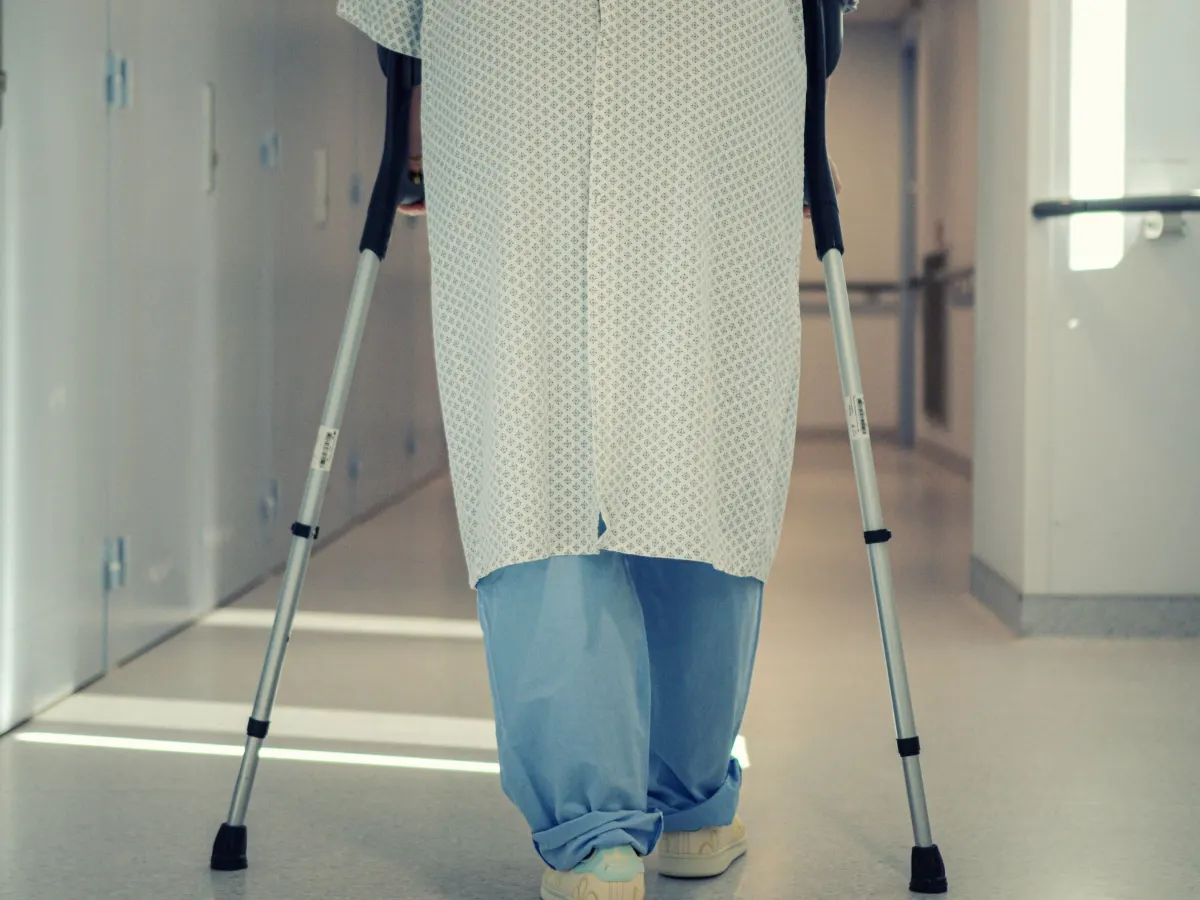
Some surgeons allow only a light touch-down of the foot, in a boot, until the stitches come out. Others let you walk as comfort allows after a day or two, with crutches for about three weeks, so the nerve can glide while scar tissue forms.
Then a move toward full weight bearing and, once the wound has healed, back into a shoe. Physical therapy, where used, aims to stop scar tissue tightening and to restore a normal walk.
Recovery from the operation itself takes roughly four to eight weeks. After right-foot surgery, driving waits until you can press the brake without pain, often three to four weeks. Return to work depends on the job; agree on a date beforehand.
Some people feel relief quickly. For others, burning, tingling and numbness ease gradually, and improvement can continue for six to twelve months.
Diabetes, smoking and severe obesity can slow wound healing. Call your surgeon about increasing redness, swelling or drainage at the incision, a temperature above 100°F for more than four hours, or pain and numbness that are getting worse. Call promptly about new pain, swelling or warmth in the calf, which can mean a blood clot, and call 911 for chest pain or sudden shortness of breath.
Risks
Complications, most often wound problems, are reported after 6.2 to 12 percent of tarsal tunnel releases. Symptoms that persist or come back are counted separately.
- Wound problems. Slow healing, a wound that opens up, thick or tender scars, and infection.
- Nerve injury. Damage to the nerve or one of its small branches can leave new numbness or pain.
- Scar tissue around the nerve. It can bring symptoms back and makes a second operation less likely to succeed.
- Symptoms that persist or return. The 2024 review found a pooled recurrence rate of 11.2 percent, often put down to an incomplete release or to scarring.
- Complex regional pain syndrome (CRPS). A rare condition in which pain after an injury or operation stays much stronger than expected, often with skin so sensitive that light touch hurts. It is reported after this surgery, and early treatment works best.
Tarsal tunnel surgery and diabetic neuropathy
Two different operations get called nerve decompression.
A trapped tibial nerve in someone with diabetes. Single-nerve problems are more common with diabetes, so a person can have diabetic neuropathy in both feet and a compressed tibial nerve in one. The American Diabetes Association’s 2017 position statement notes that nerve entrapments may require surgical decompression. When one foot is clearly worse and the examination points to the tunnel, release is reasonable to discuss, though in a 2024 series of 53 patients, diabetes predicted pain remaining after surgery.
Decompression to treat diabetic neuropathy itself. It rests on the idea that diabetes enlarges nerves so they become trapped at several points. The procedure studied in trials releases the tibial nerve at the ankle and the peroneal nerves at the knee and on top of the foot. It remains unproven.
- American Academy of Neurology, 2006: the treatment “should be considered unproven.” The academy retired that advisory in 2024.
- Cochrane review, 2008: found no randomized trial and reached the same conclusion.
- Diabetes Care, 2007: a commentary in the American Diabetes Association’s journal said it should not be recommended for diabetic polyneuropathy until definitive randomized trials are done.
- International Working Group on the Diabetic Foot, 2023: suggests not using nerve decompression to help prevent foot ulcers.
Newer trials have not settled it. In a 2024 randomized trial of 78 people with painful diabetic neuropathy, those having surgery had one leg decompressed and a sham (placebo) operation on the other. At 12 months pain had fallen more in the surgery groups than with observation alone, but the decompressed and sham legs had improved equally. At 56 months, the decompressed legs were about 1.6 points ahead on an 11-point pain scale. The authors concluded that a placebo effect may explain part or all of the benefit. A 2026 meta-analysis of seven small, high-bias trials found lower pain scores but no evidence of better sensation or ulcer healing. It recorded wound complications in about 1 in 4 operated patients and concluded the procedure should remain investigational.
For neuropathy in both feet, decompression is not standard care. Treatments with better evidence are here. If one foot is much worse than the other, ask for it to be examined in its own right.
What to try before surgery
Most people are managed without an operation. The usual options, often combined:
- Orthoses and shoes that support the arch and stop the foot rolling inward (overpronation), which takes tension off the nerve. What to look for in a shoe.
- Less load: less standing and walking, and sometimes a night splint or walking boot for a flare.
- Physical therapy, including nerve gliding exercises and calf stretching.
- Medicines. Anti-inflammatories, topical lidocaine, or a trial of a nerve pain medicine such as gabapentin or pregabalin. How those medicines compare.
- A corticosteroid injection, which can ease symptoms and help confirm the diagnosis.
- Treating the cause. A ganglion cyst can sometimes be drained with a needle under ultrasound guidance, and conditions such as diabetes or an underactive thyroid are treated in their own right.
Questions to ask your surgeon
Take these along with our general appointment questions.
- What is pressing on my nerve, and what did the imaging show?
- Have other causes been ruled out, including my back, a general neuropathy, and heel problems such as plantar fasciitis or Baxter’s nerve?
- What will you release, the retinaculum alone or the branches in the sole too?
- What result do you expect for my cause and my symptom history?
- If I have diabetes, is this for an entrapment in one foot, or for my neuropathy in general?
Common questions
What is the success rate of tarsal tunnel surgery?
A 2024 review of 32 studies found 75.3 percent of graded results excellent or good, and individual studies range from 44 to 96 percent. Results are best when a cyst or other mass is pressing on the nerve, and worse with no identifiable cause, long-standing symptoms or a previous operation.
How long is recovery after tarsal tunnel release?
Recovery from the operation takes roughly four to eight weeks, with stitches out at about two to three weeks. The nerve takes longer: some people feel relief quickly, while others improve gradually for six to twelve months. Your surgeon sets the plan for weight bearing, shoes, driving and work.
Can you walk after tarsal tunnel surgery?
Yes, within limits your surgeon sets. Some surgeons allow only a light touch-down in a boot until the stitches come out at two to three weeks. Others allow walking as comfort permits after a day or two, with crutches for about three weeks.
Does tarsal tunnel release help diabetic neuropathy?
It can help a true tarsal tunnel entrapment in someone with diabetes, though diabetes predicts less complete relief. For the symmetric neuropathy that affects both feet, decompression is unproven: the American Academy of Neurology (in 2006, in an advisory since retired) and a Cochrane review (2008) both concluded so, and a 2026 meta-analysis said it should remain investigational.
What if tarsal tunnel surgery doesn’t work?
Get the diagnosis rechecked first, since a back problem, a general neuropathy or a heel condition can cause similar symptoms. Persisting or returning symptoms are often put down to an incomplete release or scar tissue. A second operation is possible but less successful than the first, so it needs careful assessment.
Related reading
Tarsal tunnel syndrome · Nerve conduction studies · Baxter’s neuropathy · Diabetic neuropathy · Neuropathy treatment · Appointment questions
Sources and further reading: Adler L, Bergman R, Kaiser K, Tarsal tunnel syndrome, StatPearls, 2026. Haq II et al., The management of tarsal tunnel syndrome: a scoping review, Journal of Clinical Orthopaedics and Trauma, 2024. Vij N et al., Clinical results following conservative management of tarsal tunnel syndrome compared with surgical treatment: a systematic review, Orthopedic Reviews, 2022. Iborra A et al., Results of ultrasound-guided release of tarsal tunnel syndrome, Journal of Orthopaedic Surgery and Research, 2020. Lalevée M et al., Tarsal tunnel syndrome: outcome according to etiology, Journal of Foot and Ankle Surgery, 2022. Skalley TC et al., Clinical results following revision tibial nerve release, Foot & Ankle International, 1994. Rungprai C et al., Postoperative outcomes between positive and negative electrodiagnosis in patients with tarsal tunnel syndrome, Foot & Ankle International, 2024. Orthobullets, tarsal tunnel syndrome. Washington University surgical education, tarsal tunnel release. Cuyuna Regional Medical Center, understanding your tarsal tunnel release surgery. Eric H. Williams, MD, post-procedure questions about tarsal tunnel release and tarsal tunnel release surgery explained. Cleveland Clinic, tarsal tunnel syndrome, 2021. MedlinePlus, surgical wound care. NINDS, complex regional pain syndrome. On diabetic neuropathy: Chaudhry V et al., Practice advisory: utility of surgical decompression for treatment of diabetic neuropathy, American Academy of Neurology, 2006, retired 2024. Chaudhry V, Russell J, Belzberg A, Decompressive surgery of lower limbs for symmetrical diabetic peripheral neuropathy, Cochrane review, 2008. Cornblath DR et al., Surgical decompression for diabetic sensorimotor polyneuropathy, Diabetes Care, 2007. Pop-Busui R et al., Diabetic neuropathy: a position statement by the American Diabetes Association, Diabetes Care, 2017. Bus SA et al., Guidelines on the prevention of foot ulcers in persons with diabetes (IWGDF 2023 update), Diabetes/Metabolism Research and Reviews, 2024. Rozen SM et al., Effect of lower extremity nerve decompression in patients with painful diabetic peripheral neuropathy, Annals of Surgery, 2024. Zhao Y et al., Nerve decompressive surgery of the lower limbs for diabetic peripheral neuropathy: a systematic review and meta-analysis, Frontiers in Pain Research, 2026.
This page is general education and is not a diagnosis, a treatment plan, or a substitute for care from your own clinician. Clinical review by Dr. Biernacki is pending; the review date will be shown here once complete.
For our Michigan neighbors
Weighing surgery for
one burning foot?
The decision starts with an examination of the ankle and hindfoot, a look at your imaging and nerve tests, and a clear answer about what is pressing on the nerve. Dr. Biernacki’s Michigan practice can start there.
Everywhere else, take this page to your own clinician.

Dr. Tom Biernacki, DPM, FACFAS is a double board-certified foot and ankle surgeon (ABFAS and ABPM) and a Fellow of the American College of Foot & Ankle Surgeons. He is the founder of Balance Foot & Ankle in Howell and Bloomfield Township, Michigan, where peripheral neuropathy, diabetic foot risk and loss of protective sensation are part of his weekly clinic. His patient education videos have drawn more than 950,000 subscribers on YouTube. Managing Neuropathy is written by its editorial team under his direction, to put the explanation he gives in the exam room in front of the people who cannot get to one — including when a product is worth buying and when it is not.