Causes
Chemo-induced neuropathy in the feet: what helps, what lasts
Numb, burning or clumsy feet during cancer treatment are common, and they are worth reporting early. Which drug you are on shapes what happens next, and the single most useful lever is your oncology team, not a supplement.
Written by the Managing Neuropathy editorial team under the direction of Dr. Tom Biernacki, DPM, FACFAS · Clinical review pending · Last updated 24 September 2026
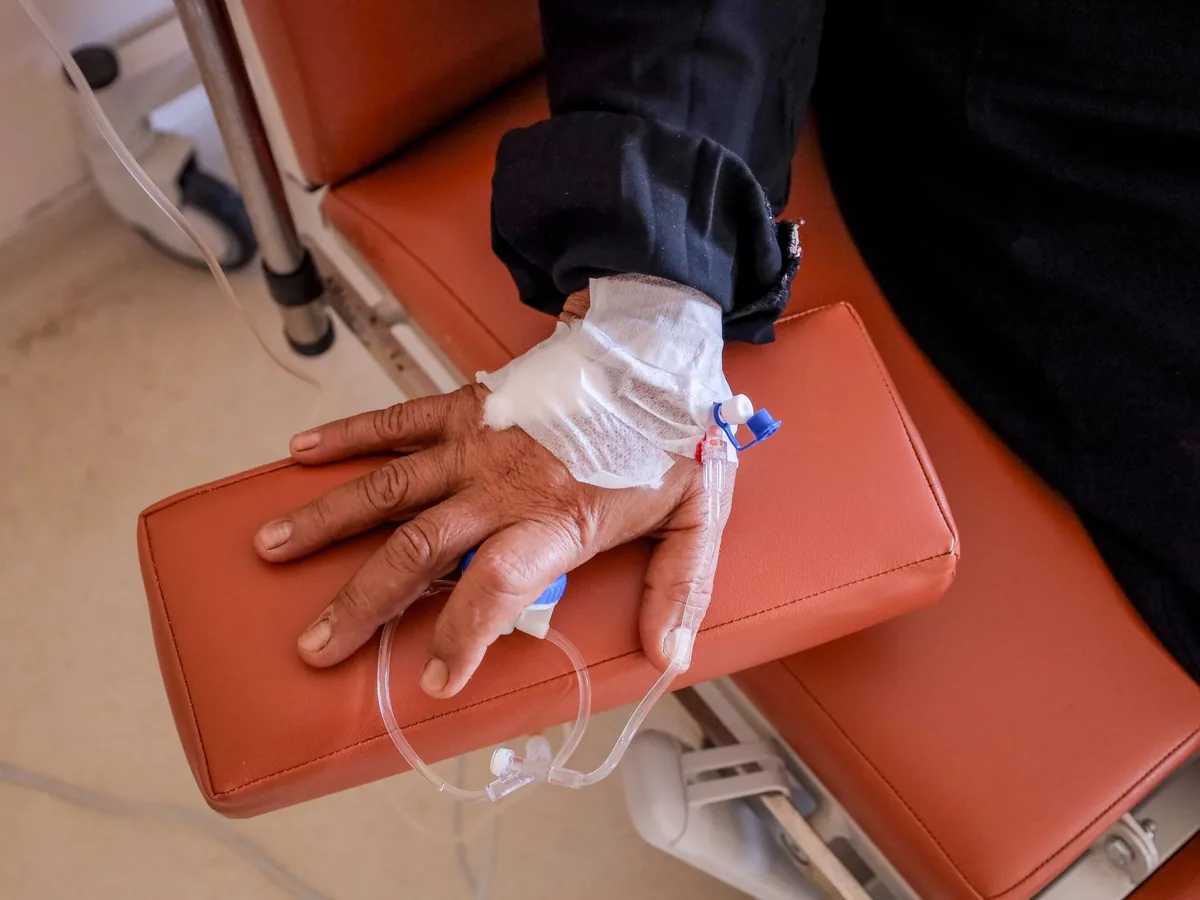
The short answer. Several cancer drugs damage the small and large nerves in the hands and feet, most often the platinum drugs, the taxanes, vinca alkaloids, bortezomib and thalidomide. Tell your oncology team as soon as symptoms start: adjusting the dose, the schedule or the drug is the only intervention proven to limit the damage. For pain that is already there, the American Society of Clinical Oncology guideline supports offering duloxetine and says no agent is recommended to prevent chemotherapy neuropathy. Most people improve over the months after treatment, but roughly a third still have symptoms six months or more later.
Which drugs cause it
Not every chemotherapy regimen carries this risk. The groups that do, according to Johns Hopkins Medicine:
| Drug group | Examples | What tends to be distinctive |
|---|---|---|
| Platinum drugs | Cisplatin, oxaliplatin, carboplatin | Cold sensitivity, and symptoms that can keep worsening after treatment stops |
| Taxanes | Paclitaxel, docetaxel | Symptoms peaking in the days after each dose, sometimes with an aching pain syndrome |
| Vinca alkaloids | Vincristine | A slow start that builds with each cycle |
| Proteasome inhibitors | Bortezomib | Used in myeloma; often painful |
| Immunomodulators | Thalidomide, lenalidomide | Dose- and duration-related |
| Antibody-drug conjugates | Brentuximab vedotin, trastuzumab emtansine | Mostly sensory |
| Immune checkpoint inhibitors | Nivolumab, pembrolizumab, ipilimumab | Uncommon, but can be immune-mediated and needs urgent assessment |
The risk goes up with higher cumulative doses and longer treatment, with older age, and where the nerves already have something to contend with: diabetes, HIV, vitamin deficiencies, previous nerve damage, heavy alcohol use and smoking.
What it feels like, and when it starts
Chemotherapy neuropathy is usually symmetric and starts in the toes and fingertips, because the longest nerves are affected first. People describe numbness, tingling, burning, or the feeling of walking on sand or in thick socks. Buttons, coins and shoelaces become fiddly. Some people notice weakness, unsteadiness, or trouble feeling the pedals when driving.
The timing depends on the drug. Taxane symptoms tend to peak in the days after each dose. Vinca alkaloid symptoms build slowly across cycles. Platinum drugs are the ones that often surprise people: symptoms can start during treatment and then keep worsening for several months after the last dose before they settle. That delayed worsening is called coasting, and it is expected rather than a sign that something has gone wrong.
Oxaliplatin also causes a short-lived cold sensitivity in the days after an infusion, when cold drinks, ice or cold air can set off tingling or a strange tightness. Oncology teams usually give specific advice about this; follow theirs.
Tell your oncology team first
This is the part that changes outcomes. The ASCO guideline’s recommendation for people who develop intolerable neuropathy during treatment is that clinicians assess and discuss the appropriateness of delaying a dose, reducing it, or stopping the drug. Those decisions balance cancer control against nerve damage, and they belong to you and your oncologist together. What they cannot do is undo damage that has already happened, which is why early reporting matters more than any product you can buy.
Describe it concretely: where it is, what it feels like, when it started, and what it stops you doing. “I can’t feel the floor well enough to go down the stairs without holding on” tells your team more than “my feet are tingly”.
What the ASCO guideline supports
The American Society of Clinical Oncology’s 2020 guideline update is blunt about how little works, and it is worth knowing before you spend money.
- Prevention: nothing is recommended. The guideline recommends against acetyl-L-carnitine specifically, and lists a long set of agents that should not be offered for prevention, including calcium and magnesium infusions, vitamin B, vitamin E, gabapentin and pregabalin, amitriptyline, cannabinoids and metformin.
- Acupuncture, cryotherapy, compression therapy and exercise: promising in early studies, but the guideline says no recommendation can be made outside a clinical trial. If your center offers one of these in a trial, that is a reasonable way to take part.
- Painful neuropathy after treatment: duloxetine may be offered. It is the only drug with a positive recommendation, and the guideline is careful, rating it moderate with benefits about equal to harms.
- Everything else for pain — gabapentin and pregabalin, tricyclics, topical creams containing amitriptyline, ketamine or baclofen, scrambler therapy, cannabinoids — has preliminary evidence only, and no recommendation outside a trial. That does not mean they are never used; it means the evidence does not yet support a general recommendation. How the nerve-pain medicines compare.
A note on supplements. Several products marketed for chemotherapy neuropathy contain high-dose vitamin B6, which causes a neuropathy of its own, or antioxidants your oncology team may want to avoid during treatment. Take the bottles to your appointment before starting anything. Why the B6 in “nerve support” formulas matters.
How long it lasts, and what recovers
Most people improve. In a review pooling 31 studies of 4,179 patients, neuropathy was present in 68% in the first month after chemotherapy, 60% at three months, and 30% at six months or later. Johns Hopkins puts the practical version this way: mild neuropathy tends to improve gradually over months, while more severe nerve injury can persist for years or become permanent.
Two things follow from that. First, the trajectory is usually downward in intensity, so a bad month is not the final answer. Second, there is no treatment that reliably reverses the nerve damage itself, so the honest goals are protecting the feet, treating pain, and keeping you steady while the nerves do what they can. What recovery actually looks like, and how fast.
Protecting numb feet during and after treatment
Numb feet do not report injuries, and cancer treatment can slow healing and lower your defenses against infection. Good light, soles and between the toes. The two-minute routine.
No heating pads, hot water bottles or hot soaks on feet that cannot feel temperature. Test bath water with your elbow or a thermometer.
Handrails, night lights, clutter cleared, supportive shoes indoors as well as out. Unsteadiness from numb feet is one of the most underrated risks in treatment.
Seams, ridges, grit and folded socks. What to look for in a shoe.
Gloves for hot pans, oven doors and gardening. The same nerves are usually involved.
Walking and balance work help steadiness, and exercise is one of the few things people can do for themselves. Ask your team what is safe for you during treatment. Balance and strength moves for numb feet.
When to call your oncology team
- New or worsening numbness, tingling or pain, at any point in treatment — the earlier the better.
- New weakness, tripping, dropping things, or trouble with stairs.
- A cut, blister, crack or callus on a numb foot, particularly with redness, swelling, warmth, or any drainage. During treatment, treat a foot wound as urgent.
- Fever, or any sign of infection alongside a foot problem.
- Dizziness on standing, new constipation or bladder trouble, which can reflect the autonomic nerves.
Common questions
Does chemo neuropathy go away?
Often it eases. In a pooled review, 68% of patients had it in the first month after chemotherapy, 60% at three months and 30% at six months or later. Mild cases tend to improve over months; severe nerve injury can last for years or be permanent.
What is the best treatment for chemotherapy-induced neuropathy?
For painful neuropathy after treatment, the ASCO guideline says duloxetine may be offered. No agent is recommended for prevention, and other treatments have only preliminary evidence. During treatment, adjusting the chemotherapy dose or schedule is the main way to limit the damage.
Why did my neuropathy get worse after chemo ended?
With platinum drugs such as oxaliplatin and cisplatin, symptoms can keep worsening for several months after the last dose before stabilizing. This is called coasting. Tell your team, but it does not mean the treatment failed.
Can I take vitamin B6 or B12 for chemo neuropathy?
Ask your oncology team before taking anything. High-dose B6 causes its own neuropathy, and the ASCO guideline recommends against B vitamins and vitamin E for prevention. B12 is worth testing for, because a deficiency is treatable and can look identical.
Will ice gloves and socks prevent it?
Cryotherapy and compression therapy have encouraging early studies, but the ASCO guideline makes no recommendation about them outside a clinical trial. If your center is running one, taking part is reasonable.
Related reading
Can neuropathy be reversed? · The daily foot check · Medicines for nerve pain · Types of neuropathy · Supplements for neuropathy · Neuropathy exercises
Sources and further reading: Loprinzi CL et al., Prevention and management of chemotherapy-induced peripheral neuropathy in survivors of adult cancers: ASCO guideline update, J Clin Oncol 2020;38:3325–3348, for the prevention, dose-modification and duloxetine recommendations. Johns Hopkins Medicine, chemotherapy-induced peripheral neuropathy, for the drug groups, timing, coasting, risk factors and self-care. Seretny M et al., Incidence, prevalence and predictors of chemotherapy-induced peripheral neuropathy: a systematic review and meta-analysis, Pain 2014;155:2461–2470. National Cancer Institute, nerve problems and cancer treatment. NIH Office of Dietary Supplements, vitamin B6.
This page is general education and is not a diagnosis, a treatment plan, or advice to change any cancer treatment. Decisions about chemotherapy belong with your oncology team. Clinical review by Dr. Biernacki is pending; the review date will be shown here once complete.
For our Michigan neighbors
Numb feet after
cancer treatment?
Protecting the feet, checking for wounds you cannot feel, and getting shoes that fit is work a podiatrist does alongside your oncology team. Dr. Biernacki’s Michigan practice can help with that part.
Everywhere else, take this page to your own clinician.

Dr. Tom Biernacki, DPM, FACFAS is a double board-certified foot and ankle surgeon (ABFAS and ABPM) and a Fellow of the American College of Foot & Ankle Surgeons. He is the founder of Balance Foot & Ankle in Howell and Bloomfield Township, Michigan, where peripheral neuropathy, diabetic foot risk and loss of protective sensation are part of his weekly clinic. His patient education videos have drawn more than 950,000 subscribers on YouTube. Managing Neuropathy is written by its editorial team under his direction, to put the explanation he gives in the exam room in front of the people who cannot get to one — including when a product is worth buying and when it is not.