Treatment
Acupuncture for neuropathy: what the evidence says
Acupuncture is one of the more reasonable things on the neuropathy menu: the risks are low in trained hands, and the studies are encouraging without being convincing. Here is what has actually been measured, and what a course involves.
Written by the Managing Neuropathy editorial team under the direction of Dr. Tom Biernacki, DPM, FACFAS · Clinical review pending · Last updated 25 September 2026
The short answer. For painful diabetic neuropathy, pooled trials suggest acupuncture added to usual treatment reduces pain more than usual treatment alone. The catch is that most of those trials compared acupuncture with no acupuncture rather than with a convincing dummy, so expectation is not ruled out. A Cochrane review of acupuncture for neuropathic pain in general found the evidence too limited and too low in quality to support or refute it. For chemotherapy-related neuropathy, the ASCO guideline says no recommendation can be made outside a clinical trial. Medicare covers acupuncture only for chronic low back pain, so expect to pay.
What the studies found
Painful diabetic neuropathy
A 2023 systematic review and meta-analysis in Frontiers in Neurology pooled 25 randomized trials covering 1,561 people with painful diabetic peripheral neuropathy. Acupuncture combined with conventional treatment reduced pain scores more than conventional treatment alone, and the effect held in the trials that used acupoints in the limbs only.
Read the comparison carefully, because it is the whole story. In most of these trials the control group received conventional treatment and no needles at all. That design measures acupuncture plus the attention, ritual and expectation that come with it. Trials that use a convincing sham, such as non-penetrating needles at non-points, usually show smaller differences, and there are few of them here.
Neuropathic pain in general
The Cochrane review of acupuncture for neuropathic pain in adults, published in 2017, found six studies with 462 participants and rated the certainty of the evidence very low, mainly because participants were not blinded, the studies were small, and dropouts were high. Its conclusion was that there is insufficient evidence to support or refute the use of acupuncture for neuropathic pain.
Chemotherapy-related neuropathy
The American Society of Clinical Oncology looked at acupuncture for chemotherapy-induced neuropathy in its 2020 guideline update and concluded that no recommendation could be made outside a clinical trial, based on preliminary evidence that needs larger studies. If your cancer center is running a trial, joining it is a sensible way to try it. More on chemotherapy neuropathy.
How to read that honestly
Acupuncture sits in a different category from the devices sold as nerve regeneration. Nobody serious claims it regrows nerve fibers, and the outcome being measured — pain — is one where a real, if partly expectation-driven, improvement still counts for something. The fair summary is: plausible for pain, unproven against a good comparison, low risk in trained hands, and paid for by you.
What it does not do is treat the cause. If your B12, glucose, thyroid and kidney function have not been checked, that comes first, whatever else you decide to try. How treatments sort into what they actually do.
What a course looks like
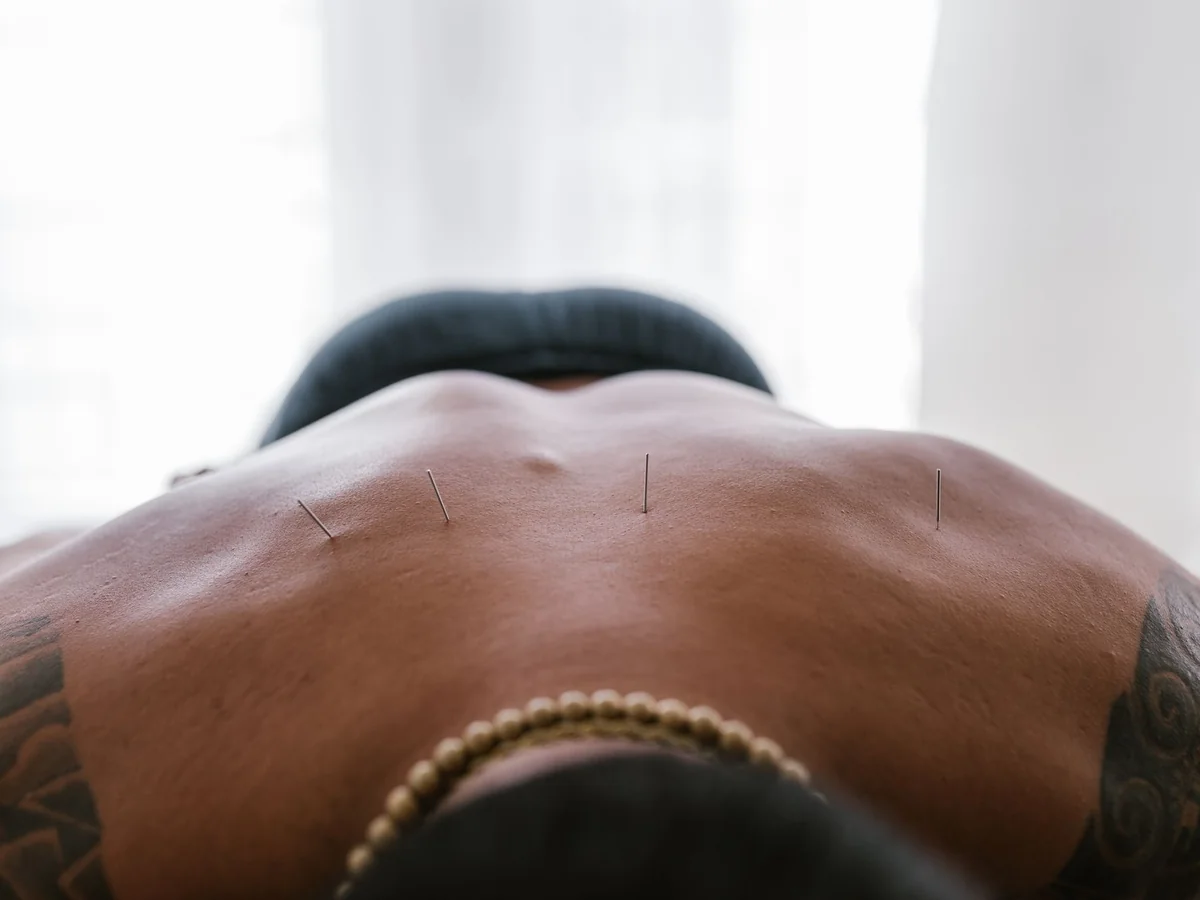
Most published courses run one to three sessions a week for six to twelve weeks, with each session lasting about 20 to 30 minutes. Practitioners typically use points on the legs and feet, sometimes with electroacupuncture, in which a mild current passes between needles.
Most people describe the insertion as a dull ache, a heaviness or nothing at all, rather than the sharp sting of an injection needle. Acupuncture needles are far finer than the needles used to take blood. Some soreness or a small bruise at a site afterward is common and settles within a day. If any part of the session is genuinely painful, say so while it is happening.
Agree in advance what you are measuring and when you will stop. A reasonable plan is a course of six to eight sessions, with a simple pain score kept before and after, and a decision point at the end. Open-ended treatment, paid up front in a large package, is a business model rather than a treatment plan.
Safety with numb feet and diabetes
The National Center for Complementary and Integrative Health reports relatively few complications from acupuncture when it is done properly, and the FDA requires needles to be sterile and single-use. Improperly delivered acupuncture can cause serious harm, including infections.
Two points deserve extra care with neuropathy:
- You may not feel a problem developing. Numb feet do not report a needle placed badly, a small bleed, or a developing infection. Look at the sites afterward, and say something at once about redness, swelling or discharge. The daily check applies here too.
- Diabetes raises the stakes of any skin break on the foot. Tell the practitioner you have diabetes and neuropathy before the first session, and discuss whether points on the feet are necessary at all. Many are not.
Also mention blood thinners, a bleeding disorder, a pacemaker or implanted defibrillator (relevant if electroacupuncture is proposed), a suppressed immune system, or a current foot wound. Do not have needles placed in an area of active infection, an ulcer, or skin that is breaking down.
Choosing a practitioner
Most US states license acupuncturists, and requirements vary by state. Look for a licensed acupuncturist, ask about their experience with diabetic neuropathy specifically, and confirm single-use sterile needles as a matter of course. Some physicians and physical therapists practice dry needling, which is a different technique with its own training and regulation.
Cost and coverage
Medicare’s national coverage determination allows acupuncture only for chronic low back pain: up to 12 sessions in 90 days, with 8 more if the patient improves, and no more than 20 a year. Acupuncture for any other condition, including neuropathy, is not covered. Some commercial and Medicare Advantage plans offer a limited acupuncture benefit, so it is worth checking your own policy. Otherwise this is an out-of-pocket treatment; ask for the per-session price and the expected number of sessions before you start.
Common questions
Does acupuncture work for neuropathy?
For pain, pooled trials in diabetic neuropathy are positive, but most compared acupuncture with no acupuncture rather than a dummy treatment. A Cochrane review of neuropathic pain overall found the evidence too weak to support or refute it. Plausible for pain, unproven, low risk.
How many sessions would I need?
Published courses usually run one to three sessions a week for six to twelve weeks. A sensible approach is to agree on six to eight sessions, keep a pain score, and review rather than commit to an open-ended package.
Does Medicare cover acupuncture for neuropathy?
No. Medicare covers acupuncture only for chronic low back pain, up to 20 sessions a year. Acupuncture for neuropathy is not covered, though some private plans include a limited benefit.
Is acupuncture safe if I have diabetes?
It can be, in trained hands with sterile single-use needles, but any break in the skin of a numb foot carries more risk when you have diabetes. Tell the practitioner, ask whether foot points are necessary, and check the sites afterward.
Can acupuncture repair nerve damage?
There is no evidence that it regenerates nerve fibers. The outcome measured in trials is pain, not nerve structure.
Related reading
Neuropathy treatment, sorted by what it does · Home remedies, examined · Chemo-induced neuropathy · Medicines for nerve pain · Red light therapy
Sources and further reading: Zhou L et al., Acupuncture for painful diabetic peripheral neuropathy: a systematic review and meta-analysis, Front Neurol 2023;14:1281485. Ju ZY et al., Acupuncture for neuropathic pain in adults, Cochrane Database of Systematic Reviews, 2017. Loprinzi CL et al., ASCO guideline update on chemotherapy-induced peripheral neuropathy, J Clin Oncol 2020;38:3325–3348. Centers for Medicare & Medicaid Services, national coverage determination 30.3.3, acupuncture for chronic low back pain (effective 21 January 2020). National Center for Complementary and Integrative Health, acupuncture safety.
This page is general education and is not a diagnosis or a treatment plan. Clinical review by Dr. Biernacki is pending; the review date will be shown here once complete.
For our Michigan neighbors
Trying things,
without a diagnosis?
Acupuncture, creams and devices all work better as additions to a plan than as substitutes for one. Dr. Biernacki’s Michigan practice can find what is driving your symptoms first.
Everywhere else, take this page to your own clinician.

Dr. Tom Biernacki, DPM, FACFAS is a double board-certified foot and ankle surgeon (ABFAS and ABPM) and a Fellow of the American College of Foot & Ankle Surgeons. He is the founder of Balance Foot & Ankle in Howell and Bloomfield Township, Michigan, where peripheral neuropathy, diabetic foot risk and loss of protective sensation are part of his weekly clinic. His patient education videos have drawn more than 950,000 subscribers on YouTube. Managing Neuropathy is written by its editorial team under his direction, to put the explanation he gives in the exam room in front of the people who cannot get to one — including when a product is worth buying and when it is not.