Causes
Erythromelalgia: red, hot, burning feet and how to cool them safely
Erythromelalgia causes flares of burning pain, redness and heat, usually in both feet. Cooling eases it, but cooling too hard, such as soaking in ice water, can injure the skin.
Written by the Managing Neuropathy editorial team under the direction of Dr. Tom Biernacki, DPM, FACFAS · Clinical review pending · Last updated 11 October 2026
The short answer. Erythromelalgia is a rare condition that causes episodes of burning pain, redness and warmth, most often in both feet. Heat, exercise, standing and tight shoes bring on flares, and cooling eases them. Often no cause is found, but it can come with a blood disorder, a medicine, neuropathy or an autoimmune disease, or be inherited, so see a clinician for a blood count. There is no single cure. Avoid triggers, use a fan, raise your feet, and don’t soak them in ice or cold water.
What erythromelalgia is
During a flare the skin turns red and hot and burns, often starting as an itch, sometimes with swelling or sweating. Flares last from minutes to days, and between them the skin may look normal or feel cool. It affects the feet in about 90 percent of people and the hands in about 25 percent, usually on both sides. The visible redness and heat help tell it apart from other causes of burning feet.
What sets it off. Flares are brought on by hot weather, a warm room, exercise, standing, tight shoes, and letting the feet hang down. Alcohol, spicy food, caffeine, stress and dehydration can also trigger flares. They are often worst late in the day or at night.
How common it is. Estimates vary widely, partly because many people are never diagnosed. A Mayo Clinic study in Olmsted County, Minnesota (2009) counted 1.3 new diagnoses per 100,000 people a year, at a median age of 61. A 2013 community study in Dunedin, New Zealand, estimated that 15 in 100,000 people had the symptoms, and only 27 percent of them had a diagnosis.
Primary and secondary erythromelalgia
Primary erythromelalgia has no underlying disease behind it, and most often no cause is found at all. Less often it is inherited: 15 percent of cases come from changes in the SCN9A gene, MedlinePlus Genetics (2016) estimates, though NORD (2023) puts cases that run in families at about 5 percent. The gene helps make Nav1.7, a sodium channel in pain-sensing nerves. The inherited form usually begins in childhood or the teens, sometimes with no family history.
Secondary erythromelalgia comes with another condition and often eases once that is treated. The main links:
- Blood disorders. The classic ones are essential thrombocythemia and polycythemia vera, bone marrow disorders that make too many platelets or red blood cells. Erythromelalgia with these typically improves quickly with aspirin, taken on a clinician’s advice.
- Medicines, including nifedipine and verapamil, two calcium channel blockers, and bromocriptine. Ask the prescriber before stopping anything.
- Small fiber neuropathy, damage to the thin nerves that carry pain and temperature. In a 2017 Mayo Clinic study of 52 people with erythromelalgia, small fiber tests showed at least one abnormality in all but one. Small fiber neuropathy explained.
- Autoimmune diseases. Lupus is named most often; rheumatoid arthritis, systemic sclerosis (scleroderma) and multiple sclerosis are also reported.
- Others reported: diabetes, some infections and cancers, and gout.
How erythromelalgia is diagnosed
There is no single test. A clinician diagnoses it from the pattern of symptoms after ruling out other causes, and a 2024 review puts the average delay at five years.
Flares may have settled by the time you are seen, so photos taken during one are extremely helpful, NORD notes.
A complete blood count (CBC) looks for too many platelets or red cells. A blood disorder can show up later, a median of about 2.5 years after flares begin, so StatPearls (2023) advises a yearly CBC. Other tests depend on your symptoms, for example for lupus or gout.
In the 2017 Mayo Clinic study, sweat and heat-sensation tests were abnormal far more often than skin biopsy, which showed reduced nerve fibers in only about 1 in 10. Nerve conduction studies measure large fibers and are often normal when only small fibers are affected. What that test shows.
It is kept for suspected inherited cases, such as symptoms since childhood or a family history.
Erythromelalgia or Raynaud’s?
The two are sometimes called opposites, and they can occur together. More on Raynaud’s and cold feet.
| Erythromelalgia | Raynaud’s | |
|---|---|---|
| Color in an attack | Red | White or pale, sometimes blue, then red as blood returns |
| Skin temperature | Hot | Cold |
| How it feels | Burning pain | Numbness, pins and needles, pain |
| Brought on by | Heat, exercise, standing, feet hanging down | Cold, stress or anxiety |
| What helps | Cooling, and raising the feet | Gentle warming |
Calcium channel blockers such as nifedipine, which is used for Raynaud’s, can make erythromelalgia worse, so tell every prescriber about both.
Another look-alike. Pain or burning that eases when the leg hangs down and worsens when it is raised points to poor circulation, the reverse of erythromelalgia, and needs prompt care.
Treatment: what helps
There are no evidence-based guidelines, and no single treatment works for everyone. A 2026 review of 25 studies with 591 people rated the evidence for most treatments as low or very low certainty; aspirin, in erythromelalgia linked to bone marrow disorders such as essential thrombocythemia, was the exception, at moderate certainty.
- Avoiding triggers comes first: loose shoes, a cool room, plenty of fluids, less alcohol and spicy food.
- Treating the cause of secondary erythromelalgia, including reviewing any medicine that may be to blame.
- Aspirin, only on a clinician’s advice. The evidence supports it mainly for erythromelalgia with essential thrombocythemia or polycythemia vera, where it is the drug of choice and usually works. Overall it helps less often: in a 2000 Mayo Clinic study, more than half of 57 people said it was not helpful at all. Don’t start daily aspirin yourself; it can cause bleeding in the stomach or brain and is for adults only.
- On the skin: lidocaine patches, capsaicin cream, and compounded amitriptyline–ketamine.
- By mouth: nerve-pain medicines such as gabapentin, pregabalin, venlafaxine and amitriptyline, antihistamines, misoprostol and magnesium. For primary erythromelalgia, the 2026 review found low-certainty evidence of benefit from mexiletine and carbamazepine; mexiletine, a heart-rhythm drug, carries a serious warning about heart risks. How nerve-pain medicines work.
- For severe cases, specialists may use lidocaine through a vein, nerve blocks or epidural infusions. Sympathectomy, surgery on nerves that control blood vessels, is rare and has been reported to set off flares.
Cooling safely: the part that protects your feet
Cooling done the wrong way can cause serious harm. The NHS says: “do not cool down your hands or feet with cold water or use ice, as this can damage your skin.” The Erythromelalgia Association calls cold-water soaks “a dangerous practice that can seriously damage the skin,” and Cleveland Clinic warns that ice baths can make symptoms worse.
Long or repeated soaks can leave skin soft, wrinkled and white (maceration) and open to germs. They can also cause a cold injury called immersion foot, ulcers, infection and, at worst, tissue death and amputation. With numb feet, you won’t feel it happening.
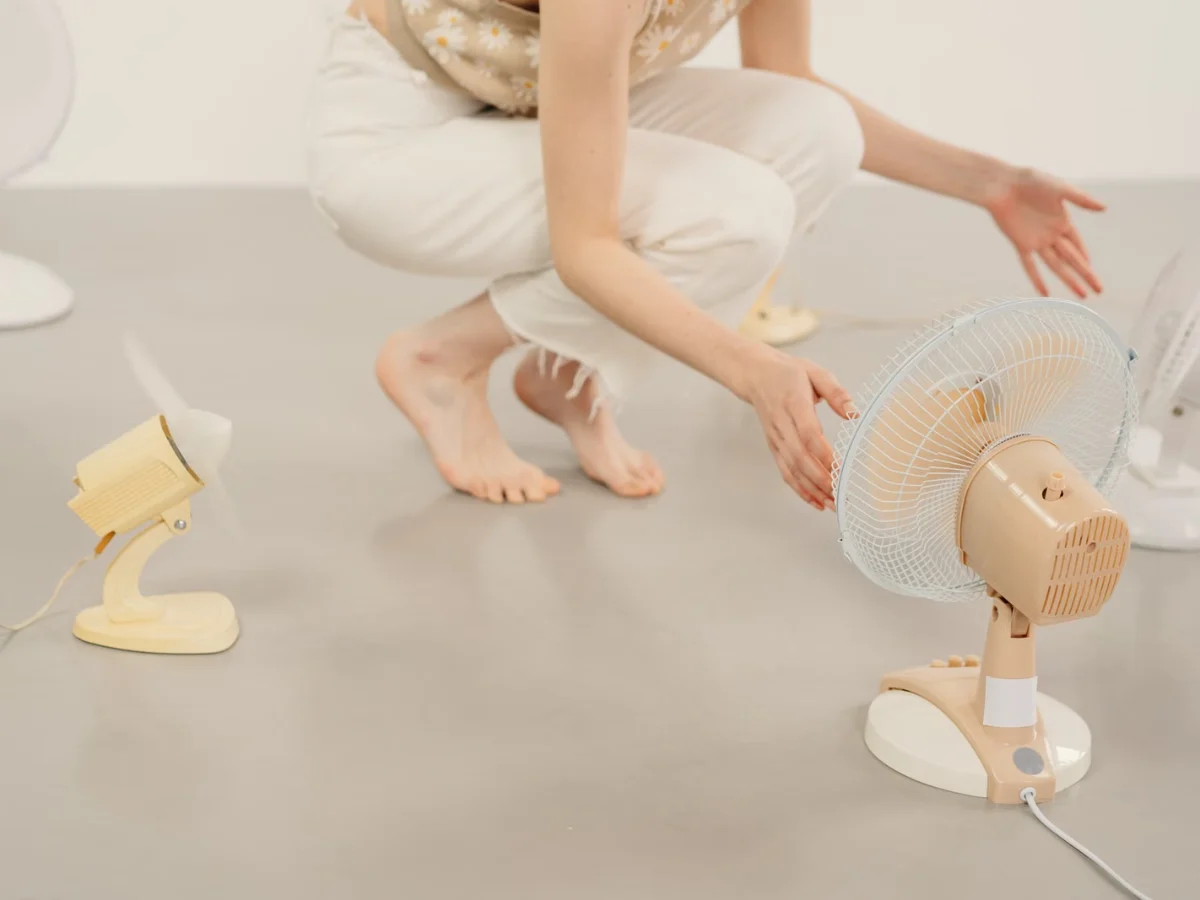
A fan aimed at your feet, air conditioning, or a cool bedroom at night.
Elevation eases a flare; letting them hang down makes it worse.
A cool, not cold, gel pack in a thin towel, for a short time. Even fans and gel packs can harm skin if overused. With numb feet, use moving air instead.
Look at the soles, heels and between the toes for blisters, breaks, soggy white skin, dark spots, or redness that stays after a flare. The daily foot check.
When to get help urgently
- Call 911 for chest pain, trouble breathing or bleeding you can’t stop, or for sudden numbness or weakness in the face, an arm or a leg, especially on one side, sudden confusion or trouble speaking or seeing, sudden loss of balance, or a sudden severe headache: possible heart attack, stroke or serious bleeding. Essential thrombocythemia and polycythemia vera raise the risk of blood clots.
- Go to an emergency department, or call 911, if a foot or leg suddenly turns very painful, pale, cold, or numb and weak: possibly a blocked artery.
- Go to an emergency department, or call 911, if, after icing or a cold soak, the skin is hard and frozen, swollen and without feeling, or blistered: possible frostbite. Don’t rub it or warm it with direct heat.
- Get seen the same day for one red, hot, swollen leg or spreading redness: possibly a blood clot or cellulitis. Call 911 if you also have chest pain, trouble breathing, a very high temperature, confusion or faintness.
- Get seen the same day for a blister, sore or break in the skin that is red, oozing or getting worse, or a patch that turns dark or black, especially after soaking or icing your feet.
- Call or text 988, or chat at 988lifeline.org, if constant pain ever leaves you thinking about ending your life, or in emotional distress. The 988 Suicide & Crisis Lifeline is free, confidential and available 24/7.
Common questions
What autoimmune diseases cause erythromelalgia?
Lupus (systemic lupus erythematosus) is the one most often linked with it. Rheumatoid arthritis, systemic sclerosis (scleroderma) and multiple sclerosis are also reported. These links are uncommon: in most people no underlying disease is found, and blood disorders are the best-known secondary cause.
How do you know if you have erythromelalgia?
The pattern is the clue: burning pain with visible redness and heat, usually in both feet, set off by warmth, exercise or standing and eased by cooling. No single test confirms it, so a clinician diagnoses it from your history, an examination and photos of a flare, with a blood count to look for a blood disorder.
What is the difference between Raynaud’s and erythromelalgia?
They behave like opposites. In Raynaud’s, cold or stress turns fingers or toes white or blue, and they feel cold and numb until warmed. In erythromelalgia, heat, exercise or standing turns the feet red, hot and burning, and cooling helps. The two can occur together, and nifedipine, a Raynaud’s treatment, can worsen erythromelalgia.
How do you get rid of erythromelalgia?
There is no single cure. When a blood disorder, a medicine or another condition is behind it, treating that cause can ease it; with essential thrombocythemia or polycythemia vera, aspirin prescribed by a clinician usually helps. Otherwise, avoid triggers, cool safely and try medicines. In a Mayo Clinic study published in 2000, about 1 in 10 people followed for nearly nine years on average said their symptoms had gone completely.
Should you soak your feet in ice water for erythromelalgia?
No. It can bring relief, but the NHS, Cleveland Clinic and The Erythromelalgia Association all warn against ice and cold-water soaks. Long or repeated soaking can damage the skin and lead to cold injury, ulcers, infection and, at worst, amputation. Use a fan, a cool room, raised feet or a brief, wrapped cool gel pack, and check your feet afterward.
Related reading
Burning feet at night · Small fiber neuropathy · The daily foot check · Neuropathic pain · Home remedies, examined
Sources and further reading: NHS, Erythromelalgia, 2023, including its advice on cooling. Cleveland Clinic, Erythromelalgia, 2022. National Organization for Rare Disorders (NORD), Erythromelalgia, 2023. The Erythromelalgia Association, FAQs, 2018, and A patient’s guide to erythromelalgia, 2016. Jha SK, Karna B, Goodman MB, Erythromelalgia, StatPearls, 2023. MedlinePlus Genetics, Erythromelalgia, 2016. Gonzalez Caldito E et al., Erythromelalgia. Part I: pathogenesis, clinical features, evaluation, and complications and Part II: differential diagnoses and management, Journal of the American Academy of Dermatology, 2024. Ma JE, Lee JUJ, Sartori-Valinotti JC, Rooke TW, Sandroni P, Davis MDP, Erythromelalgia: a review of medical management options and our approach to management, Mayo Clinic Proceedings, 2023. Racca C, Berthelot S, Franken J et al., Pain management in erythromelalgia: a systematic review and graded appraisal across etiological subtypes, European Journal of Pain, 2026. Eaton AC, Mayrovitz HN, Primary erythromelalgia: historical perspective and current update, Cureus, 2025. Davis MDP, Rooke T, Erythromelalgia, Current Treatment Options in Cardiovascular Medicine, 2006, which summarizes Davis MDP et al., Natural history of erythromelalgia: presentation and outcome in 168 patients, Archives of Dermatology, 2000. On how common it is: Reed KB, Davis MDP, Incidence of erythromelalgia: a population-based study in Olmsted County, Minnesota, Journal of the European Academy of Dermatology and Venereology, 2009. Friberg D, Chen T, Tarr G, van Rij AM, Erythromelalgia? A clinical study of people who experience red, hot, painful feet in the community, International Journal of Vascular Medicine, 2013. Chen M, Chu D, Guo W, Briley J, Davis MDP, Sartori-Valinotti JC, Demographics and co-morbid associations in patients with erythromelalgia: a retrospective cohort database study, Archives of Dermatological Research, 2026. On small fiber testing: Mantyh WG, Dyck PJB, Dyck PJ et al., Epidermal nerve fiber quantification in patients with erythromelalgia, JAMA Dermatology, 2017, as summarized by Healio, 2017. Cascio MA, Mukhdomi T, Small fiber neuropathy, StatPearls, 2022. On blood disorders and aspirin: Liesveld J, Essential thrombocythemia, Merck Manual Professional Version, 2025. Cleveland Clinic, Essential thrombocythemia, 2026. Mayo Clinic, Polycythemia vera: symptoms and causes, 2025. NHLBI, Polycythemia vera. US Food and Drug Administration, Before using aspirin to lower your risk of heart attack or stroke, what you should know, 2016. On medicines: MedlinePlus, Nifedipine and Verapamil, 2017, and Mexiletine, 2016. On Raynaud’s: NHS, Raynaud’s, 2023. NIAMS, Raynaud’s phenomenon. Chatterjee S, Coexistence of erythromelalgia and Raynaud’s phenomenon, Cleveland Clinic Consult QD, 2024. On skin and feet: Cleveland Clinic, Macerated skin, 2026. NIDDK, Diabetes and foot problems, 2017. Warning signs: CDC, stroke signs and symptoms, 2026; CDC, blood clots, 2025; NHS, DVT, 2026; NHS, cellulitis, 2024; NHS, frostbite, 2025; Society for Vascular Surgery, acute limb ischemia; Cleveland Clinic, chronic limb-threatening ischemia, 2026; 988 Suicide & Crisis Lifeline.
This page is general education and is not a diagnosis, a treatment plan, or a substitute for care from your own clinician. Clinical review by Dr. Biernacki is pending; the review date will be shown here once complete.
For our Michigan neighbors
Feet that burn and redden
whenever they warm up?
An examination, a blood count and a look at your medicines can show whether something treatable is behind the flares. Dr. Biernacki’s Michigan practice can start there.
Everywhere else, take this page to your own clinician.

Dr. Tom Biernacki, DPM, FACFAS is a double board-certified foot and ankle surgeon (ABFAS and ABPM) and a Fellow of the American College of Foot & Ankle Surgeons. He is the founder of Balance Foot & Ankle in Howell and Bloomfield Township, Michigan, where peripheral neuropathy, diabetic foot risk and loss of protective sensation are part of his weekly clinic. His patient education videos have drawn more than 950,000 subscribers on YouTube. Managing Neuropathy is written by its editorial team under his direction, to put the explanation he gives in the exam room in front of the people who cannot get to one — including when a product is worth buying and when it is not.