Causes
Vitamin B12 and neuropathy: deficiency, dosage and recovery
Low vitamin B12 can damage the nerves to the feet and hands, and sometimes the spinal cord. B12 neuropathy can appear before any anemia. A blood test can find it, and treatment works best when it starts early.
Written by the Managing Neuropathy editorial team under the direction of Dr. Tom Biernacki, DPM, FACFAS · Clinical review pending · Last updated 4 October 2026
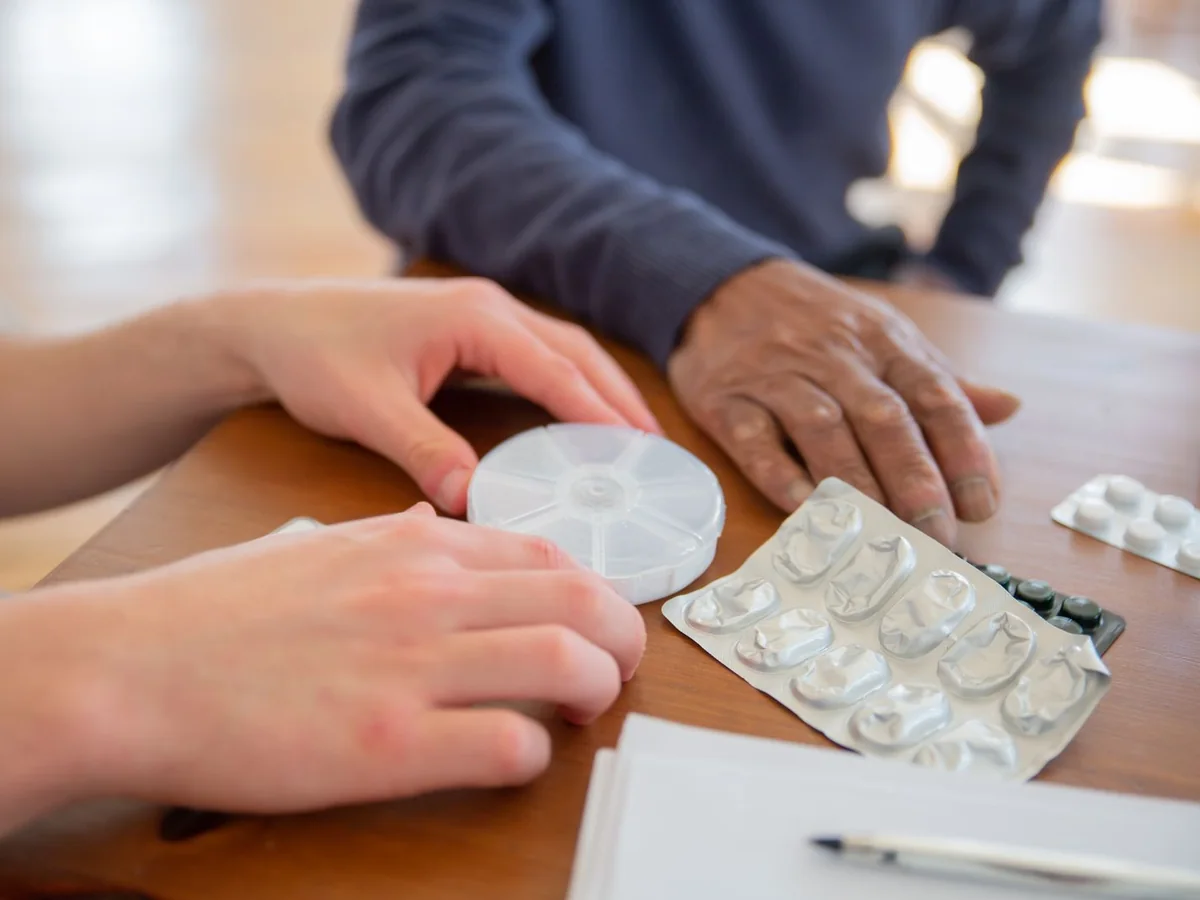
The short answer. Low vitamin B12 can cause numbness and pins and needles in the feet and hands, and unsteady walking, sometimes with no anemia. The risk is higher with age, long-term metformin or acid reducers, pernicious anemia, stomach or bowel surgery, a vegan diet, heavy drinking and nitrous oxide misuse. Get tested before taking B12. A deficiency with nerve symptoms is usually treated with injections, and symptoms may start to improve within 2 weeks to 3 months. With normal levels, extra B12 hasn’t been shown to help.
How low B12 damages nerves
The brain and spinal cord need vitamin B12 to form myelin, the fatty coating that insulates nerve fibers, and to work normally. When B12 runs short, two substances, methylmalonic acid (MMA) and homocysteine, build up and contribute to damage to myelin.
The peripheral nerves suffer, mostly in the legs, and sometimes the spinal cord too, in subacute combined degeneration. Its back and side columns carry position and vibration sense and the signals that move the legs, so the result is unsteady walking, weakness and stiff legs.
The NIH notes that nerve symptoms can occur without anemia, “so early diagnosis and intervention is important to avoid irreversible damage.” The body stores about 1 to 5 mg of B12, so a deficiency can take several years to appear. The other best-known vitamin cause of neuropathy is the opposite problem, too much vitamin B6.
Who is at risk
B12 comes naturally only from animal foods, and absorbing it from food takes stomach acid, intrinsic factor (a protein made in the stomach) and the last part of the small intestine. The main risks:
- Older age. Atrophic gastritis, which cuts stomach acid and intrinsic factor, affects 8 to 9 percent of adults 65 and older.
- Metformin, especially at higher doses and after years of use (see below).
- Long-term acid reducers: proton pump inhibitors (PPIs) such as omeprazole, and H2 blockers.
- Pernicious anemia, in which the immune system attacks the stomach lining and intrinsic factor is lost. NICE, which advises the NHS in England, calls it autoimmune gastritis. Other autoimmune conditions, such as thyroid disease, also raise the risk.
- Stomach or bowel surgery, including many weight-loss operations, and removal of the stomach or the end of the small intestine.
- A vegan diet without fortified foods or a supplement.
- Heavy drinking, which can also damage nerves in its own right.
- Nitrous oxide misuse. The gas inactivates B12, and NICE advises stopping it. In 2025 the FDA warned against inhaling it, listing numbness, tingling, trouble walking and paralysis among the harms.
- Other medicines on NICE’s list, including colchicine, some seizure medicines and pregabalin, a common nerve-pain drug. Don’t stop these or an acid reducer on your own; ask the prescriber about a B12 test.
Symptoms
The usual symptoms:
- Numbness or pins and needles in the feet and hands.
- Poor balance and falls, from losing the sense of where your feet are.
- Weak or stiff legs, when the spinal cord is involved.
- A sore, red tongue, mouth ulcers, extreme tiredness, or pale or yellowish skin.
- Memory, mood or vision changes, including confusion and blurred vision.
None is specific to B12. Diabetes, the leading cause of neuropathy in the US, can look much the same, so tests decide. The blood tests for the common causes.
Testing: before you take any B12
Get tested before starting a supplement. NICE advises taking blood first, because over-the-counter B12 can raise levels without fully treating a deficiency. The first test is total B12 or active B12, read in three bands:
| Total B12 | Active B12 | NICE 2024 reading |
|---|---|---|
| Below 180 ng/L (133 pmol/L) | Below 25 pmol/L | Deficiency confirmed |
| 180 to 350 ng/L (133 to 258 pmol/L) | 25 to 70 pmol/L | Indeterminate: possible deficiency |
| Above 350 ng/L (258 pmol/L) | Above 70 pmol/L | Deficiency unlikely |
US labs report pg/mL, which gives the same number as ng/L, and most flag results below 200 or 250 pg/mL as low.
Borderline results. With symptoms, NICE suggests a second test, methylmalonic acid (MMA), which the NIH calls the most sensitive marker of B12 status. If you use nitrous oxide, NICE advises homocysteine or MMA first, because B12 levels can look normal even with a deficiency.
A normal blood count doesn’t rule it out. Nerve damage can occur without anemia, and large amounts of folate can correct the anemia of B12 deficiency, but not the nerve damage.
Treatment and dosage: what the guidelines say
Treatment replaces B12 and, where possible, removes the cause. When anemia is suspected along with nerve symptoms, NICE advises starting B12 without waiting for test results. Doses are in micrograms (mcg); 1,000 mcg is 1 mg.
Injections are the usual start when nerves are involved, and US and UK schedules differ:
| United States (cyanocobalamin) | United Kingdom (hydroxocobalamin) | |
|---|---|---|
| With nerve symptoms | 1,000 mcg every other day for 2 weeks (StatPearls, 2024). The FDA-approved label, for pernicious anemia, starts at 100 mcg daily for 6 or 7 days | 1,000 mcg every other day while symptoms keep improving (product information, 2024) |
| Then | 1,000 mcg monthly; the label gives 100 mcg monthly for life | 1,000 mcg every 2 months may be needed after nerve symptoms (NHS); otherwise every 2 to 3 months, often for life |
Tablets. Large doses are partly absorbed even without intrinsic factor, Merck’s manual notes; the NIH puts absorption at about 1.3 percent of a 1,000 mcg dose, about 13 mcg, several times the daily need. In a 2018 Cochrane review of three small trials (153 people), low-quality evidence showed that 1,000 or 2,000 mcg a day by mouth raised blood B12 about as well as injections, at lower cost. No trial reported on symptoms.
Where guidance differs. Merck’s manual gives 1,000 to 2,000 mcg a day by mouth to people without severe deficiency or nerve symptoms. NICE (2024) allows tablets or injections when a medicine or nitrous oxide is the cause, and tablets of at least 1 mg a day for some absorption problems, but advises lifelong injections for autoimmune gastritis or after total removal of the stomach or of the last part of the small intestine. The US injection label calls oral treatment “not dependable” in pernicious anemia.
The NIH says no evidence shows that absorption from supplements varies by form, such as cyanocobalamin or methylcobalamin. Treatment is lifelong unless the cause is corrected.
No official upper limit.
| Body and year | Adults need a day | Upper limit |
|---|---|---|
| US Food and Nutrition Board, 1998 | 2.4 mcg | None set, “because of its low potential for toxicity” |
| European Food Safety Authority, 2015; EU Scientific Committee on Food, 2000 | 4 mcg | None: no clearly defined harm to base one on |
| UK: NHS advice | About 1.5 mcg | 2 mg or less a day from supplements is “unlikely to cause any harm” |
The NHS adds that the effects of higher daily doses aren’t known.
Safety: who should be careful
- Allergy to cobalt or B12 rules out the injection, the US label says.
- Leber’s hereditary optic neuropathy, an inherited eye disease. The US label warns of severe, rapid optic nerve damage when people in its early stage were given cyanocobalamin.
- Severe anemia. Potassium can drop early in treatment, so it is checked.
- Folic acid alone. In someone low in B12, more than 0.1 mg a day can correct the anemia while the nerve damage continues, the US label warns. Have B12 checked before folic acid treatment starts, but don’t stop folic acid that was prescribed or taken for pregnancy without asking your clinician.
- Kidney disease. Ask before taking high-dose B vitamins. In a 2010 trial of 238 people with diabetic kidney disease, daily folic acid 2.5 mg, B6 25 mg and B12 1 mg together led to a faster fall in kidney function than placebo, and about twice the risk of heart attack, stroke, artery procedures or death. A deficiency still needs treating; your clinician will choose how.
- Other medicines. The interactions the NIH lists run one way: medicines such as metformin and acid reducers lower B12.
Metformin and B12
Metformin, a first-line medicine for prediabetes and diabetes, may reduce B12 absorption, and the American Diabetes Association’s 2026 Standards of Care link it to worsening neuropathy symptoms. In the long-term Diabetes Prevention Program study (2016), 19.1 percent of people taking metformin had low or borderline B12 after 5 years, against 9.5 percent on placebo.
| Source and year | Advice on B12 testing |
|---|---|
| American Diabetes Association, 2026 | “Consider periodic assessment of vitamin B12 levels in individuals receiving long-term metformin therapy, especially in those with anemia or peripheral neuropathy.” Yearly after more than 4 years on metformin, or with other risk factors |
| US metformin label, 2023 | Measure B12 “at 2 to 3 year intervals” |
| MHRA, the UK medicines regulator, 2022 | Test if a deficiency is suspected; consider periodic checks with risk factors. It may affect up to 1 in 10 people taking metformin |
Don’t stop metformin on your own. The MHRA advises keeping it going while B12 is corrected, and NICE recommends B12 replacement while the medicine is taken. If you have diabetes and numb feet, ask for B12 by name. More on diabetic neuropathy.
Recovery: what to expect
That is NICE’s range. Symptoms can get worse at first; this should settle.
Anemia is usually corrected within 6 weeks. Nerves take longer.
If tablets haven’t helped enough, the dose goes up or injections start. If injections haven’t, they may be given more often, and other causes are considered.
Full recovery can take much longer, and symptoms present for months or years before treatment can be permanent. With spinal cord involvement, outcomes are better under age 50 and after a shorter illness.
Without a deficiency, the evidence is weak. A 2008 Cochrane review found it insufficient to say whether B vitamins help or harm, and a 2026 review of 13 trials in diabetic neuropathy found small gains in some neuropathy scores but no clear effect on pain, with bias and inconsistency that “preclude firm recommendations for routine use.” Other supplements compared.
Meanwhile, protect numb feet. Check them daily, don’t go barefoot or in socks alone, even indoors, and keep heating pads off them. The daily foot check. Balance exercises. How nerves recover in general.
When to get help urgently
- Go to an emergency department, or call 911, for weakness, often with tingling, that worsens over hours or days, especially spreading up from the feet, or any trouble breathing or swallowing: possible Guillain-Barré syndrome.
- Call 911 for sudden numbness or weakness of the face, an arm or a leg, especially on one side, sudden trouble speaking or sudden loss of balance: possible stroke.
- Go to an emergency department, or call 911, for numbness around the groin or bottom, or new bladder or bowel trouble, with back pain or leg weakness: possible pressure on the nerves at the base of the spine.
- Get seen the same day for numbness with new trouble walking, falls, leg weakness or stiffness, confusion or blurred vision, especially if you use nitrous oxide or have had weight-loss surgery. Treatment may need to start before results are back.
- Call your clinician before your next appointment if, after starting treatment, symptoms haven’t improved, get worse or return, or new ones appear.
- Call your doctor the same day if a sore on a numb foot turns red, warm or painful, or hasn’t started to heal within a few days.
Common questions
How much B12 should I take for neuropathy in my feet?
Get tested first, because the dose depends on the cause. With a deficiency and nerve symptoms, treatment usually starts with injections, such as 1,000 mcg every other day at first. Tablets of 1,000 to 2,000 mcg a day suit milder deficiency without nerve symptoms. Your clinician sets the dose. With normal levels, no dose has been shown to help.
Are B12 shots better than pills for neuropathy?
With nerve symptoms, treatment usually starts with injections, and NICE advises lifelong injections when pernicious anemia is the cause. In a 2018 Cochrane review, low-quality evidence from three small trials showed 1,000 or 2,000 mcg a day by mouth raised blood B12 about as well as injections, but the trials didn’t report on symptoms. With normal B12, neither has been shown to help nerves.
How long does it take B12 to help neuropathy?
NICE says symptoms could start to improve within 2 weeks, but this may take up to 3 months, and full recovery can take much longer. Symptoms can get worse at first, and this should settle. Damage present for months or years before treatment may not fully recover. If you haven’t improved by 3 months, ask about adjusting treatment or other causes, and call sooner if symptoms keep worsening, return or new ones appear.
Does metformin cause B12 deficiency?
It can, especially at higher doses and after years of use; the UK regulator says it may affect up to 1 in 10 people who take it. The ADA’s 2026 Standards of Care advise considering periodic B12 checks with long-term use, especially with neuropathy or anemia. Keep taking metformin; low B12 is treated with B12.
Can B12 reverse nerve damage?
When a deficiency caused it, treatment often helps, most of all when started early, though recovery takes months and long-standing damage can be permanent. For neuropathy without a deficiency, there is no good evidence that extra B12 repairs nerves; reviews of B vitamins in 2008 and 2026 found the evidence too weak to recommend them.
Related reading
The Romberg test · Numbness in hands and feet · Can neuropathy be reversed? · Supplements for neuropathy · Diabetic neuropathy · Tingling in feet
Sources and further reading: NIH Office of Dietary Supplements, Vitamin B12 fact sheet for health professionals, 2025, and consumer fact sheet, 2023, for B12’s role, daily amounts (Food and Nutrition Board, 1998), the upper limit, absorption, forms, risk groups, symptoms, testing and medicine interactions; and the folate fact sheet for health professionals, on folate and B12 deficiency. National Institute for Health and Care Excellence, Vitamin B12 deficiency in over 16s: diagnosis and management (NG239), 2024. British Society for Haematology, Diagnosis of B12 and folate deficiency, noting that its 2014 guideline has been superseded by NICE NG239. Hydroxocobalamin 1mg/ml solution for injection, summary of product characteristics, electronic medicines compendium (UK), 2024. NHS, Vitamin B12 or folate deficiency anaemia and its treatment, 2023, and Vitamin B, 2020. Cyanocobalamin injection prescribing information, DailyMed, 2024. Metformin hydrochloride tablets prescribing information, DailyMed, 2023. American Diabetes Association, Standards of Care in Diabetes—2026, section 3 (recommendation 3.10) and section 9, Diabetes Care, 2026. Medicines and Healthcare products Regulatory Agency, Metformin and reduced vitamin B12 levels: new advice for monitoring patients at risk, 2022. Aroda VR et al., Long-term metformin use and vitamin B12 deficiency in the Diabetes Prevention Program Outcomes Study, Journal of Clinical Endocrinology & Metabolism, 2016. Wang H et al., Oral vitamin B12 versus intramuscular vitamin B12 for vitamin B12 deficiency, Cochrane review, 2018. Ang CD et al., Vitamin B for treating peripheral neuropathy, Cochrane review, 2008. Mandra EV et al., Vitamin B supplementation for diabetic peripheral neuropathy: a review and meta-analysis, Journal of Clinical Medicine, 2026. Ankar A, Kumar A, Vitamin B12 deficiency, StatPearls, 2024. Saji AM, Lui F, De Jesus O, Spinal cord subacute combined degeneration, StatPearls, 2024. Johnson LE, Vitamin B12 deficiency, Merck Manual Professional Version, 2026. US Food and Drug Administration, FDA advises consumers not to inhale nitrous oxide products, 2025. EU Scientific Committee on Food, Opinion on the tolerable upper intake level of vitamin B12, 2000. European Food Safety Authority, Scientific opinion on dietary reference values for cobalamin (vitamin B12), EFSA Journal, 2015. House AA et al., Effect of B-vitamin therapy on progression of diabetic nephropathy, JAMA, 2010, summarized in American Family Physician, 2011. Cleveland Clinic, vitamin B12 deficiency, 2025, on alcohol as a risk factor. NINDS, peripheral neuropathy. Warning signs: NINDS, Guillain-Barré syndrome; CDC, stroke signs and symptoms; NHS, sciatica, on symptoms that need emergency care; NIDDK, diabetes and foot problems.
This page is general education and is not a diagnosis, a treatment plan, or a substitute for care from your own clinician. Clinical review by Dr. Biernacki is pending; the review date will be shown here once complete.
For our Michigan neighbors
Numb feet and
a borderline B12?
An examination, a look at your medicines and the right follow-up blood test can show whether low B12 is part of the picture. Dr. Biernacki’s Michigan practice can start there.
Everywhere else, take this page to your own clinician.

Dr. Tom Biernacki, DPM, FACFAS is a double board-certified foot and ankle surgeon (ABFAS and ABPM) and a Fellow of the American College of Foot & Ankle Surgeons. He is the founder of Balance Foot & Ankle in Howell and Bloomfield Township, Michigan, where peripheral neuropathy, diabetic foot risk and loss of protective sensation are part of his weekly clinic. His patient education videos have drawn more than 950,000 subscribers on YouTube. Managing Neuropathy is written by its editorial team under his direction, to put the explanation he gives in the exam room in front of the people who cannot get to one — including when a product is worth buying and when it is not.