Causes
Polyneuropathy: what it is, what causes it and what helps
Polyneuropathy means many nerves are damaged at the same time. It usually starts in both feet and creeps slowly upward. Diabetes is the most common cause, and the cause decides much of what happens next.
Written by the Managing Neuropathy editorial team under the direction of Dr. Tom Biernacki, DPM, FACFAS · Clinical review pending · Last updated 11 October 2026
The short answer. Polyneuropathy is damage to many peripheral nerves at once, the nerves outside the brain and spinal cord. It is usually even on both sides, starting with numbness, tingling or burning in the toes and spreading slowly upward. Diabetes is the most common cause. Others include alcohol, low vitamin B12, some medicines, kidney and thyroid disease, abnormal blood proteins and inherited conditions. Treatment starts with the cause. Weakness that spreads over hours or days is an emergency.
What polyneuropathy is
Polyneuropathy is the malfunction of many peripheral nerves at the same time. It can affect sensory nerves, which carry feeling, motor nerves, which work the muscles, and autonomic nerves, which control involuntary functions such as blood pressure.
The far ends of the longest nerves usually go first, so symptoms begin in the toes of both feet and spread slowly upward. The hands, if involved, follow later: the “stocking and glove” pattern. Its medical name is distal symmetric polyneuropathy, the most common form of neuropathy according to the American Academy of Neurology (AAN). Numbness, tingling and burning usually come first; weakness and unsteady walking can follow. The full symptom list.
How common it is. A 2020 review in American Family Physician puts peripheral neuropathy at 1 to 7 percent of the general population, higher over age 50. In a 2016 Dutch study of 1,310 people with an average age of 70, 5.5 percent had definite polyneuropathy, and almost half of those cases had never been diagnosed.
Polyneuropathy, mononeuropathy and mononeuritis multiplex
| Mononeuropathy | Mononeuritis multiplex | Polyneuropathy | |
|---|---|---|---|
| Nerves | One | Two or more separate nerves | Many at once |
| Pattern | That nerve’s area only | Patchy and uneven, often painful | Both sides evenly, feet first |
| Typical causes | Pressure or injury: carpal tunnel syndrome (the most common), or pressure on the peroneal nerve at the knee, causing foot drop | Vasculitis (inflamed blood vessels) and other rheumatic diseases such as lupus; also diabetes, sarcoidosis, amyloidosis and infections | Diabetes, alcohol, low vitamin B12, medicines and the causes below |
Multifocal motor neuropathy, a rare immune condition, weakens muscles in a patchy way, usually without numbness, most often starting in one hand.
Types of polyneuropathy
Three distinctions matter most here; types of neuropathy covers the rest.
- Which part of the nerve. Axonal neuropathies damage the axon, the nerve fiber itself, and come most often from toxic or metabolic causes such as diabetes, kidney disease, chemotherapy and alcohol. Demyelinating neuropathies damage myelin, the fiber’s insulating coat, as in Guillain-Barré syndrome and CIDP.
- How fast. In Guillain-Barré syndrome (GBS), the immune system attacks the nerves, and weakness “usually comes on quickly and worsens over hours or days.” Chronic forms develop over months to years. Chronic inflammatory demyelinating polyneuropathy (CIDP), considered the long-term form of GBS, worsens over at least eight weeks.
- Inherited or acquired. Charcot-Marie-Tooth disease, the most common inherited neuropathy, affects roughly 1 in 2,500 people, though estimates vary widely. More on Charcot-Marie-Tooth disease.
Causes, most common first
Many causes are treatable. The 2026 Standards of Care from the American Diabetes Association (ADA) advise considering other causes even in people who have diabetes.
- Diabetes and prediabetes. Diabetes is the leading cause of peripheral neuropathy in the US, says the National Institute of Neurological Disorders and Stroke (NINDS). In a 2021 review of 29 studies, most found neuropathy more often than expected in prediabetes too, mainly in small nerve fibers. Diabetic neuropathy.
- Alcohol. Excessive drinking is another common cause.
- Low vitamin B12, which can damage nerves even without anemia. Long-term metformin and acid-reducing medicines can lower it. Vitamin B12 and neuropathy. Too much vitamin B6 can cause polyneuropathy too.
- Chemotherapy and other medicines, including some drugs for HIV, infections, heart disease and seizures. Don’t stop a prescribed medicine on your own; ask the prescriber.
- Kidney disease. Most people on dialysis develop some form of peripheral neuropathy, NINDS notes.
- An underactive thyroid (hypothyroidism).
- Abnormal blood proteins and amyloidosis. Some blood disorders make an abnormal antibody called a paraprotein. In AL amyloidosis, parts of it build up in the heart, kidneys and nerves; a 2025 review stresses spotting it early in people with neuropathy.
- Infections, including HIV, hepatitis C and Lyme disease, and immune attacks such as GBS and CIDP.
- Inherited conditions, most often Charcot-Marie-Tooth disease, and rarely hereditary transthyretin amyloidosis.
When no cause is found
A polyneuropathy is called idiopathic when testing finds no cause. It is common: 25 to 46 percent of peripheral neuropathy in the 2020 American Family Physician review, and 46 percent of polyneuropathy in the Dutch study. The usual form, chronic idiopathic axonal polyneuropathy, usually progresses slowly, a 2016 review found. Ask which tests were done. If they find nothing, Mayo Clinic says, watchful waiting may be advised.
How polyneuropathy is diagnosed
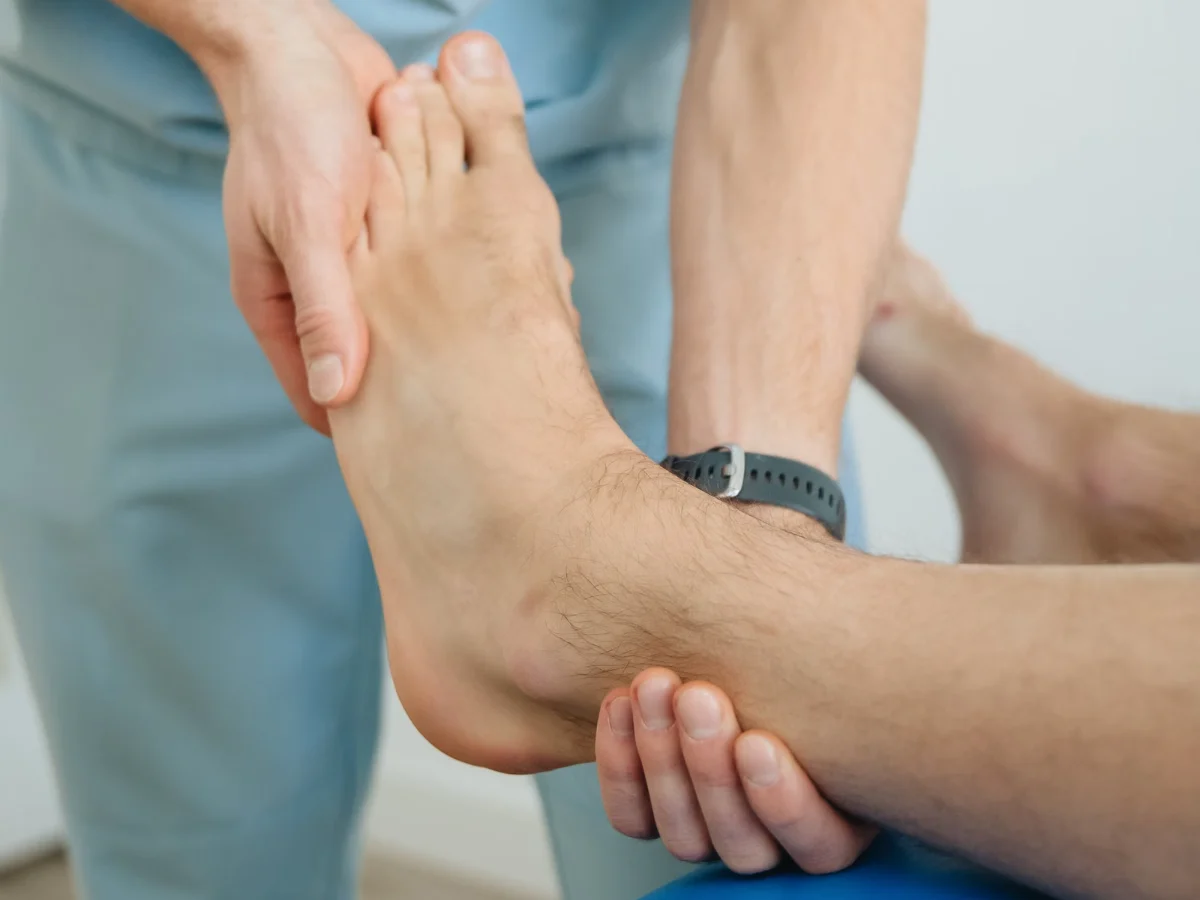
Questions about your symptoms and how fast they came on, alcohol, medicines, supplements, toxins and family history, then checks of reflexes, strength, feeling and balance.
The AAN’s evidence review, published in 2009 and reaffirmed in 2025, found “the highest yield of abnormality” from blood glucose, vitamin B12 with its metabolites (methylmalonic acid, with or without homocysteine), and serum protein immunofixation electrophoresis, a test for abnormal antibody proteins. If routine glucose tests don’t show diabetes, a glucose tolerance test may be considered in mainly sensory neuropathy. These are level C recommendations, framed as tests that “may be considered.” The 2020 American Family Physician review and Merck’s manual add thyroid and kidney tests.
Small electrical pulses test the nerves, and a fine needle records muscle activity (electromyography, or EMG). Merck’s manual calls these tests necessary to classify a neuropathy. For people with diabetes, the ADA’s 2026 Standards say they are rarely needed unless the picture is atypical (fairly sudden, uneven, not feet-first, or with weakness) or the diagnosis is unclear. What the tests involve.
A skin biopsy shows small nerve endings that standard nerve tests miss. Genetic testing helps diagnose inherited neuropathies. A spinal tap helps when weakness is widespread and worsening fast. A nerve biopsy, usually of the sural nerve in the lower leg, is done only when necessary, because it can further damage the nerve and cause lasting pain and numbness.
Treatment
- Treat the cause. With diabetes, the ADA’s 2026 Standards advise optimizing glucose management to prevent or delay neuropathy in type 1 diabetes and to slow it in type 2. Thyroid hormone treats an underactive thyroid, and B12 replaces a deficiency. Stopping a medicine, with the prescriber’s agreement, or avoiding a toxin “can sometimes reverse the polyneuropathy,” Merck’s manual says.
- Calm an immune attack. GBS is treated in hospital with plasma exchange, which filters antibodies out of the blood, or intravenous immunoglobulin (IVIG), donated antibodies given by vein. NINDS says the two are “equally effective if started within two weeks.” CIDP is treated with corticosteroids, IVIG or plasma exchange.
- Treat nerve pain. Recommendations updated in 2025 by the Neuropathic Pain Special Interest Group (NeuPSIG) put tricyclic antidepressants, SNRI antidepressants such as duloxetine, and gabapentin or pregabalin first, with capsaicin and lidocaine skin treatments second. Results are modest, and each has side effects. How nerve pain is treated.
- Protect numb feet. Check them every day, and wear shoes and socks at all times, even indoors. The daily foot check.
- Stay steady. Physical therapy can help with weakness and balance problems. Braces, orthopedic shoes, a cane or a walker can make walking easier and safer.
Outlook and life expectancy
“How completely people recover depends on the cause of polyneuropathy,” Merck’s manual says. When the cause is corrected, NINDS notes, a neuropathy can sometimes resolve as nerves recover and regrow. Recovery is slow, though, and may be incomplete.
- Guillain-Barré syndrome can be life-threatening when it affects breathing, blood pressure or heart rate. Most people eventually recover, even from severe cases, though some are left with weakness, numbness, fatigue or pain.
- CIDP. About 90 percent improve with treatment and about half relapse, Cleveland Clinic says; life expectancy is typically normal.
- Charcot-Marie-Tooth disease. Most people have a normal life expectancy.
- Diabetic polyneuropathy. No treatment can yet reverse the nerve damage, the ADA’s 2026 Standards say, but glucose management can help slow it.
Life expectancy. There is no single figure. In a 2021 US study of 7,116 adults aged 40 and over, followed for a median of 13 years, those who had lost feeling in their feet on a monofilament test had higher death rates, with or without diabetes. That shows a link and can’t prove cause. How neuropathy can add risk, and what lowers it. What recovers, and what doesn’t.
When to get help urgently
- Go to an emergency department, or call 911, for weakness that spreads over hours or days, or for any new trouble breathing or swallowing. These can be signs of Guillain-Barré syndrome, which needs hospital care.
- Call 911 for sudden numbness or weakness in the face, an arm or a leg, especially on one side of the body, sudden trouble speaking, or sudden loss of balance. These can be signs of a stroke.
- Go to an emergency department, or call 911, for new numbness around the groin or bottom, or new bladder or bowel trouble, especially with back pain or leg weakness. These can be signs of pressure on the nerves at the base of the spine.
- Get seen the same day for a foot that turns warm, red and swollen without an injury. In a numb foot this can be Charcot foot, a weakening of the foot bones, or an infection. Keep weight off it until then.
- Call your doctor the same day if a cut, blister or bruise on a numb foot turns red, warm, swollen or painful, drains, or comes with a fever, or if it hasn’t started to heal after a few days.
- See your doctor promptly for numbness or weakness that hits one nerve after another, especially with weight loss or fever, which can mean vasculitis. The same goes for neuropathy that is worsening over weeks, is much worse on one side, or mainly causes weakness.
Common questions
What is the main cause of polyneuropathy?
Diabetes. It is the leading cause of peripheral neuropathy in the US, according to NINDS, and in a 2016 Dutch population study it was the most common risk factor, found in 31 percent of people with polyneuropathy. Excessive alcohol use is another common cause.
What is the difference between neuropathy and polyneuropathy?
Neuropathy, or peripheral neuropathy, is the umbrella term for damage to nerves outside the brain and spinal cord. Polyneuropathy is its most common form: many nerves affected at once, usually evenly on both sides and starting in the feet. Mononeuropathy affects one nerve, as in carpal tunnel syndrome.
Can you fix polyneuropathy?
Sometimes. When a cause such as low vitamin B12, an underactive thyroid, a medicine or alcohol is corrected, nerves can recover, though slowly and not always fully. Most people eventually recover from Guillain-Barré syndrome, and most with CIDP improve with treatment. No treatment can yet reverse diabetic nerve damage, but good glucose management can help slow it.
What is the life expectancy with polyneuropathy?
It depends on the cause. Most people with CIDP or Charcot-Marie-Tooth disease have a normal life expectancy. In a 2021 US study of 7,116 adults aged 40 and over, those with lost feeling in the feet had higher death rates over a median of 13 years, with or without diabetes, though that doesn’t prove the nerve damage was the cause.
What does idiopathic polyneuropathy mean?
It means testing found no cause. That is common: 25 to 46 percent of peripheral neuropathy, in a 2020 review, and 46 percent of polyneuropathy in a 2016 Dutch population study. The usual form tends to progress slowly. Ask which tests were done, including whether a glucose tolerance test was considered.
Related reading
Small fiber neuropathy · Peripheral neuropathy medication · Alcohol-related neuropathy · Chemotherapy-induced neuropathy · Peroneal neuropathy · Neuropathy exercises
Sources and further reading: NINDS, peripheral neuropathy, 2026, on the leading cause, medicines, dialysis, infections, nerve and skin biopsy, braces and recovery; NINDS, Guillain-Barré syndrome, 2026; and NINDS, Charcot-Marie-Tooth disease, 2026. Feldman AM, Polyneuropathy and Multiple mononeuropathy, Merck Manual Consumer Version, 2026, and Polyneuropathy, Mononeuropathies and Multiple mononeuropathy, Merck Manual Professional Version, 2026. England JD et al., Practice parameter: evaluation of distal symmetric polyneuropathy: role of laboratory and genetic testing (an evidence-based review), Neurology, 2009, and the American Academy of Neurology’s guideline page, which records its reaffirmation in 2025. Castelli G, Desai KM, Cantone RE, Peripheral neuropathy: evaluation and differential diagnosis, American Family Physician, 2020. Hanewinckel R, Drenthen J, van Oijen M, Hofman A, van Doorn PA, Ikram MA, Prevalence of polyneuropathy in the general middle-aged and elderly population, Neurology, 2016. American Diabetes Association, Standards of Care in Diabetes—2026, section 12, Diabetes Care, 2026. Kirthi V et al., Prevalence of peripheral neuropathy in pre-diabetes: a systematic review, BMJ Open Diabetes Research & Care, 2021. Zis P, Sarrigiannis PG, Rao DG et al., Chronic idiopathic axonal polyneuropathy: a systematic review, Journal of Neurology, 2016. Mayo Clinic, Peripheral neuropathy: diagnosis and treatment, 2026, on the history and examination, watchful waiting, physical therapy and walking aids. NIH Office of Dietary Supplements, Vitamin B12 fact sheet for health professionals, 2025. Mayo Clinic, Monoclonal gammopathy of undetermined significance (MGUS), 2026. Traub R, Rubinstein S, Dittus C, Update on paraproteinemic neuropathy, Current Neurology and Neuroscience Reports, 2025. MedlinePlus, Immunofixation blood test, 2026. MedlinePlus Genetics, Charcot-Marie-Tooth disease, 2026, and Transthyretin amyloidosis, 2023. Cleveland Clinic, Mononeuropathy, 2025; CIDP, 2023; and Multifocal motor neuropathy, 2025. Witt AM, Kodal LS, Dysgaard T, Diagnosis and treatment of vasculitic neuropathy, Practical Neurology, 2024. Soliman N et al., Pharmacotherapy and non-invasive neuromodulation for neuropathic pain: a systematic review and meta-analysis, Lancet Neurology, 2025. Hicks CW, Wang D, Matsushita K, Windham BG, Selvin E, Peripheral neuropathy and all-cause and cardiovascular mortality in U.S. adults: a prospective cohort study, Annals of Internal Medicine, 2021. Warning signs: CDC, stroke signs and symptoms, 2026; AAOS OrthoInfo, cauda equina syndrome; American College of Foot and Ankle Surgeons, Charcot foot; NIDDK, diabetes and foot problems.
This page is general education and is not a diagnosis, a treatment plan, or a substitute for care from your own clinician. Clinical review by Dr. Biernacki is pending; the review date will be shown here once complete.
For our Michigan neighbors
Numb feet, and no
clear cause yet?
An examination of feeling, strength and reflexes, and a look at which tests have already been done, can show what is still worth checking. Dr. Biernacki’s Michigan practice can start there.
Everywhere else, take this page to your own clinician.

Dr. Tom Biernacki, DPM, FACFAS is a double board-certified foot and ankle surgeon (ABFAS and ABPM) and a Fellow of the American College of Foot & Ankle Surgeons. He is the founder of Balance Foot & Ankle in Howell and Bloomfield Township, Michigan, where peripheral neuropathy, diabetic foot risk and loss of protective sensation are part of his weekly clinic. His patient education videos have drawn more than 950,000 subscribers on YouTube. Managing Neuropathy is written by its editorial team under his direction, to put the explanation he gives in the exam room in front of the people who cannot get to one — including when a product is worth buying and when it is not.